
Watson
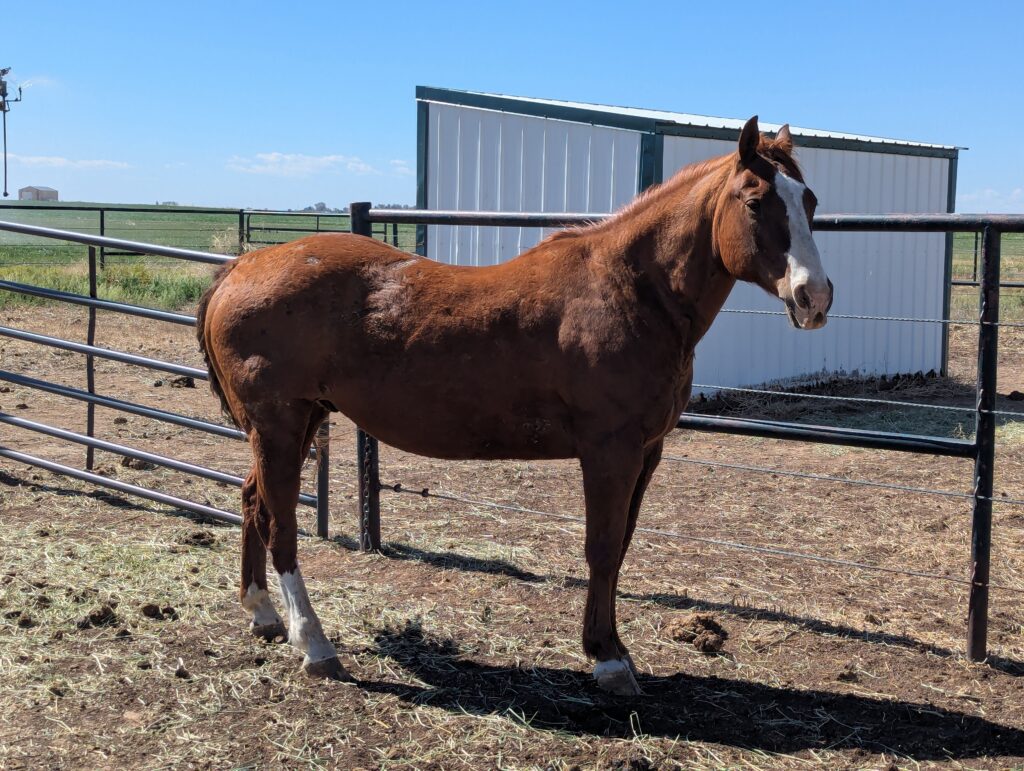
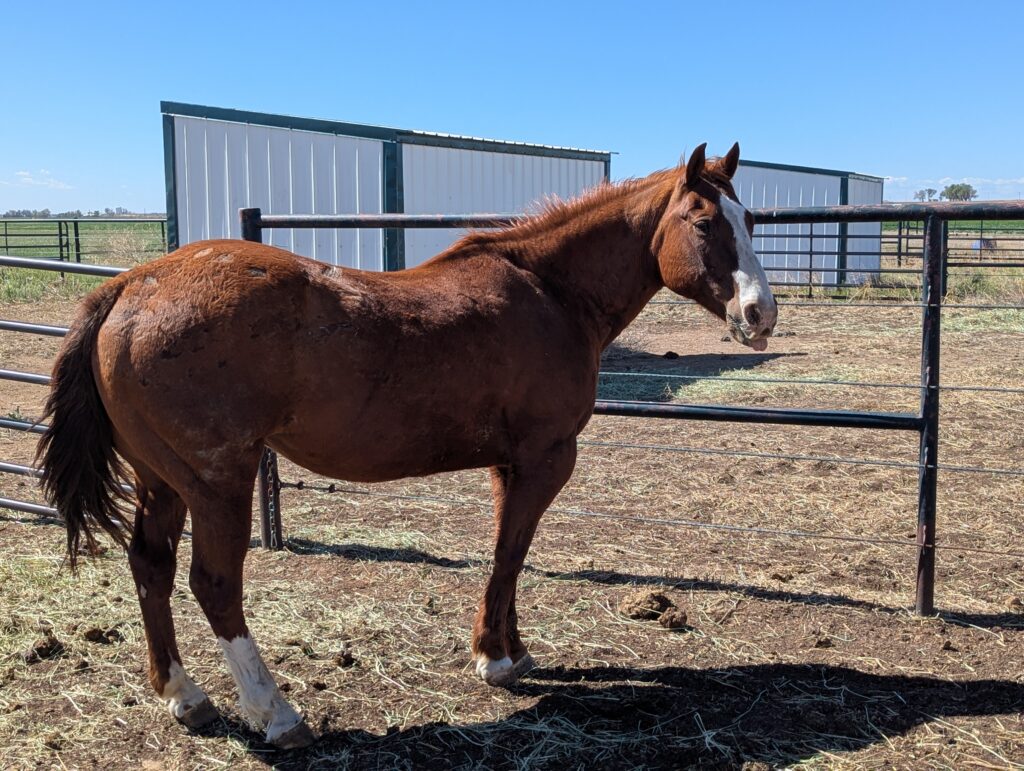
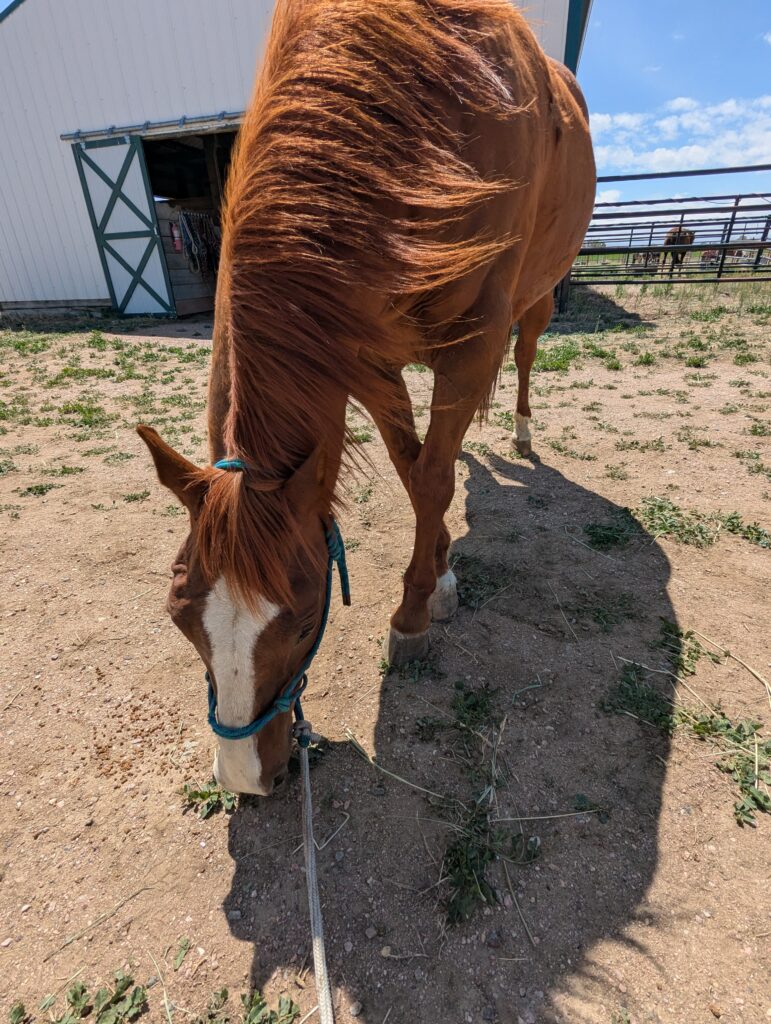
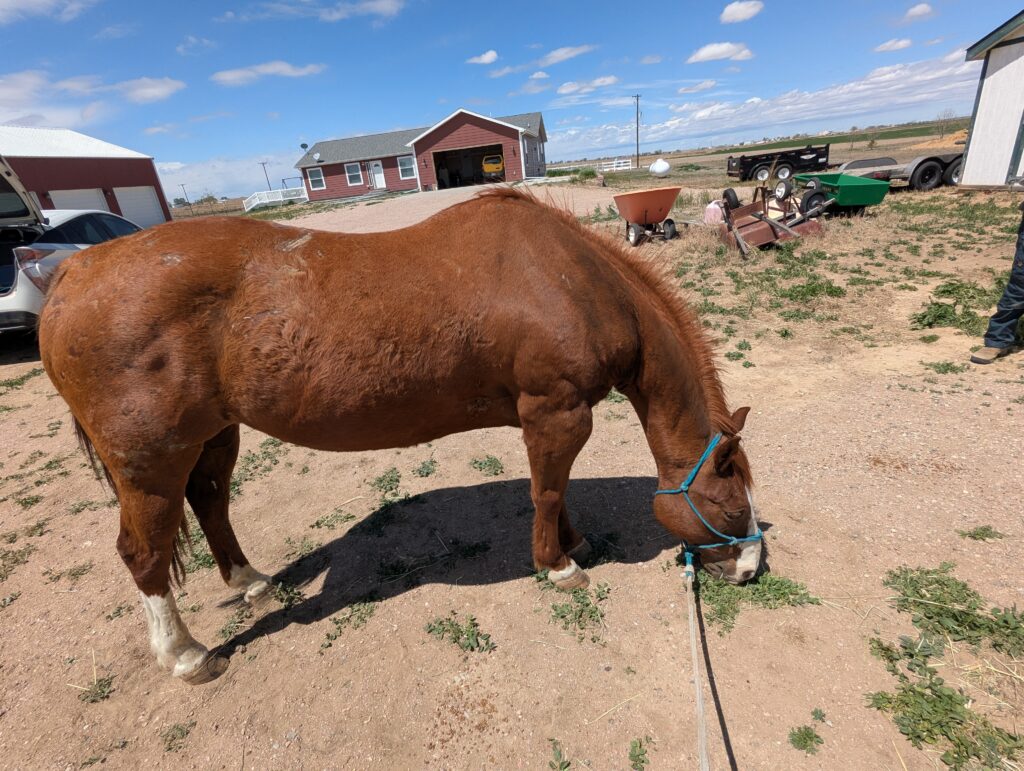
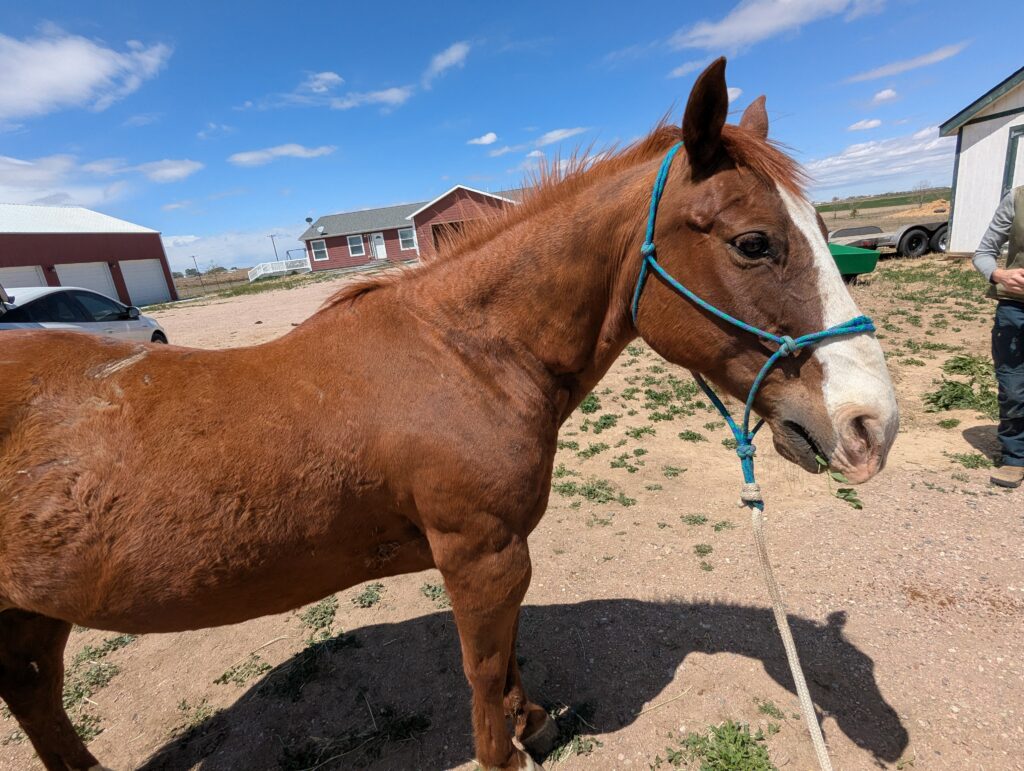
Watson is a Quarter horse gelding who was spared from entering the slaughter pipeline in April 2026. He had been purchased to use and resell as a riding horse. However, he began showing symptoms of randomly having great difficulty walking, and at times, unable to get up from laying down.
Our initial thought was possible HYPP positive which our vet did confirm as a primary issue for Watson. He also has numerous scars along his body as well as fresh bite marks from other horses he was penned up with.
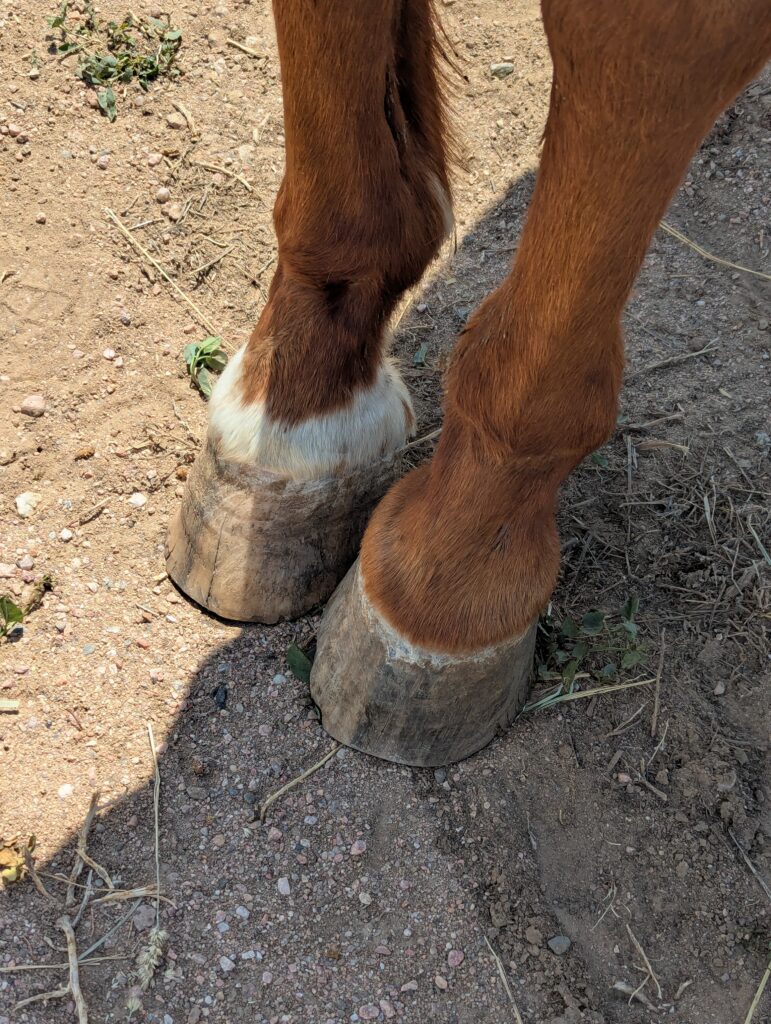
Watson is a big sorrel QH-style gelding with a large blaze. His gait at the walk is bizarre, as he “floats” his forelimbs, hovering them above the ground when in the extended position prior to placing each one for the stance phase. When he stands tied, he often places the right hoof on the dorsal left hoof, and vice versa, without apparent sensation of this extremely base-narrow stance preference. He trips himself often when stepping on himself.
The right jugular is scarred down in the caudoventral cervical spine, and there is an abundance of abrasions and scarring all over his chest, abdomen, hindquarters and back.
Most neurologic horses that present with conscious proprioception (CP) deficits and ataxia, truncal sway, and a general inability to sense their own body and limbs in space have worse clinical signs in the pelvic limbs than the thoracic. Watson’s more clinically abnormal thoracic limbs are highly unusual, and the lesion localization(s) are also more challenging.
This horse does not have wobblers or cervical stenosis, so the neurological etiology could be almost anything. While unlikely, some infectious causes are any of the encephalitaties (EEE, WEE, WNV), or encephalitis secondary to either CNS disease (spinal meningitis) or caused by hepatopathies, or EPM caused by ingestion of opossum feces (outside of CO) or the wild type mutation of Equine Rhino Virus.
Spinal cord lesions or physical inflammation or entrapments may cause significant neurological deficits, but as mentioned above, typically present with worse pelvic limb signs.
Due to the advanced state of his neurological condition and acute/chronic lameness issues, Watson was humanely euthanized as no treatment could assist with his disease/disability, all of which would continue to worsen even more.
It is shocking to think how many potential owners this horse had and their ignorance of or outright ignoring of his serious health condition. Perhaps too many Quarter horse owners are unaware of the HYPP genetic disease?
Hyperkalemic Periodic Paralysis (HYPP) is characterized by sporadic attacks of muscle tremors (shaking and trembling), weakness, and/or collapse. Attacks can also be accompanied by loud breathing noises resulting from paralysis of the muscles of the upper airway.
HYPP is a disease caused by a genetic mutation that disrupts the muscle’s sodium channel resulting in too much potassium in the blood. This causes severe muscle cramping, pain, and in extreme cases, paralysis resulting in death. Approximately 4.4% of quarter horses are carriers of HYPP, most commonly found in halter horses.
More About Watson
- In Assessment
- Chestnut
- Gelding
- 2008
- QH
- Colorado