
Gus
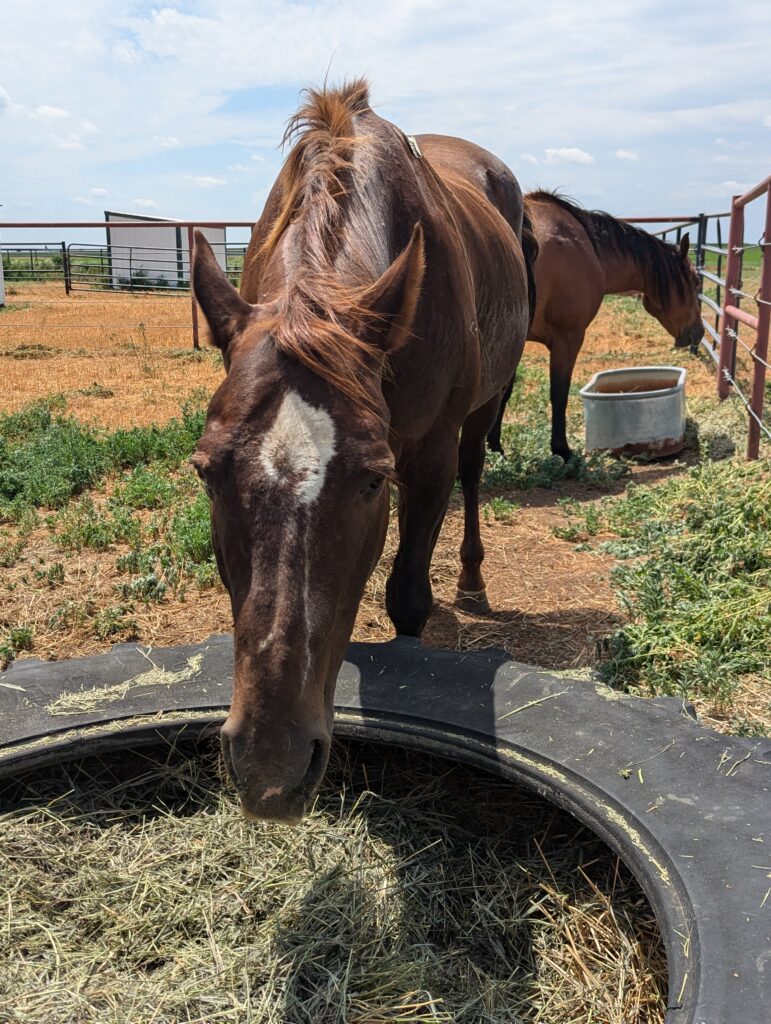
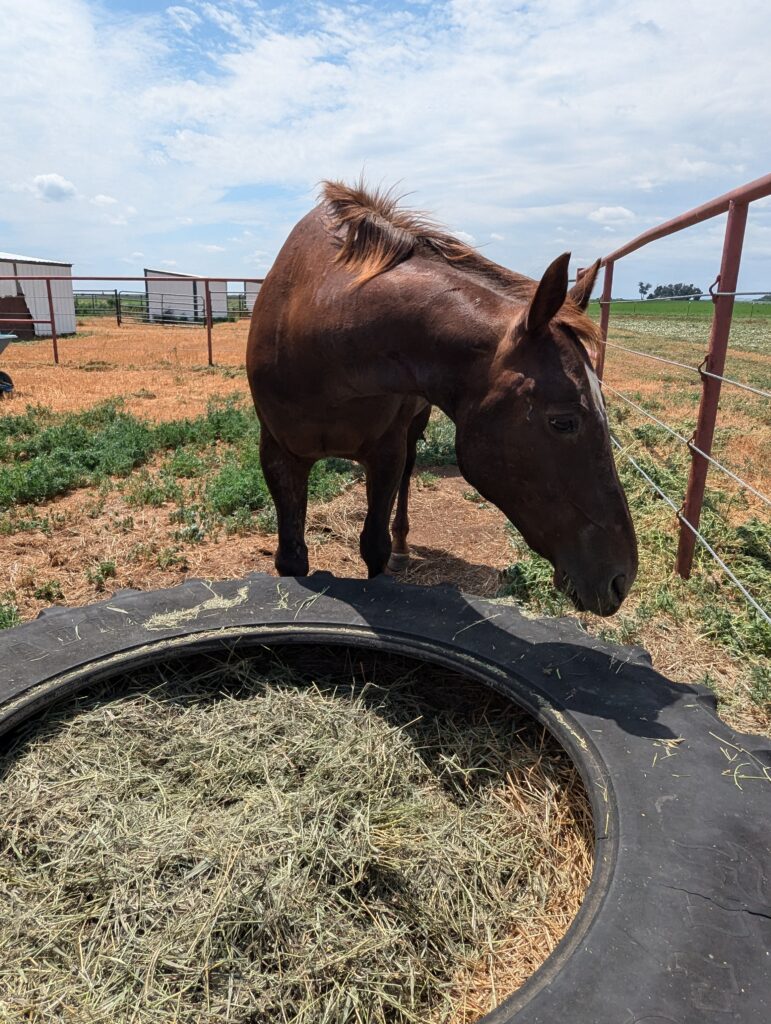
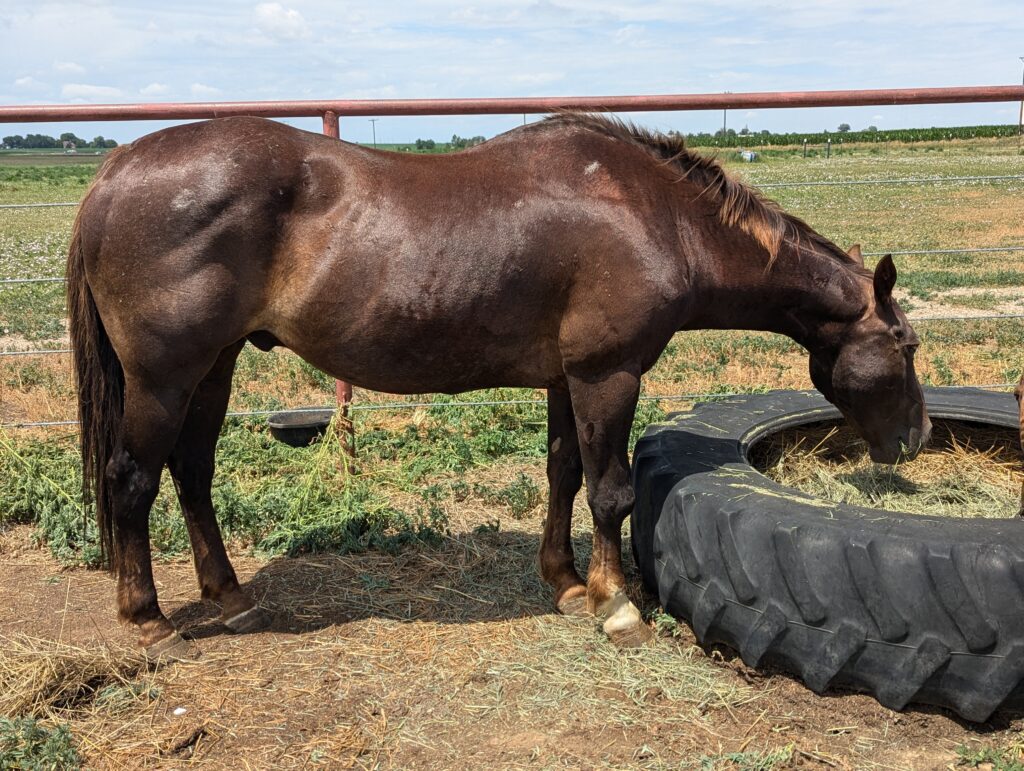
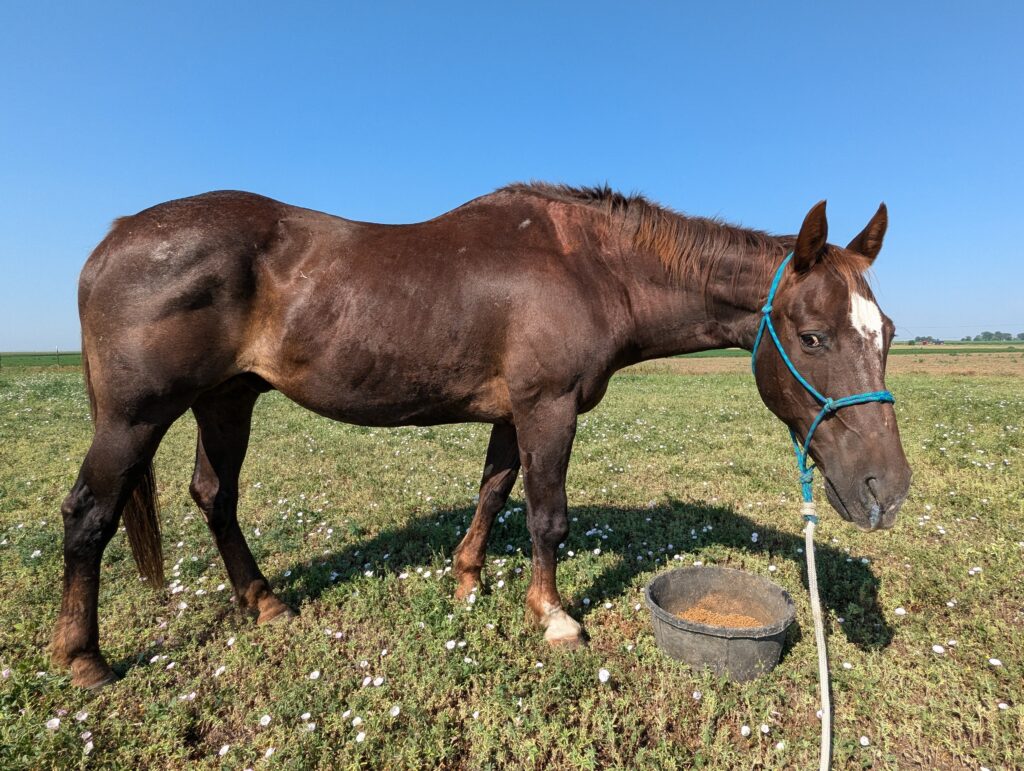
Gus was rescued in July 2025. He had been dumped at an auction and was in danger of entering the slaughter pipeline.
His veterinary exam revealed years of neglect and, quite frankly, abuse, from lack of basic care and hard use:
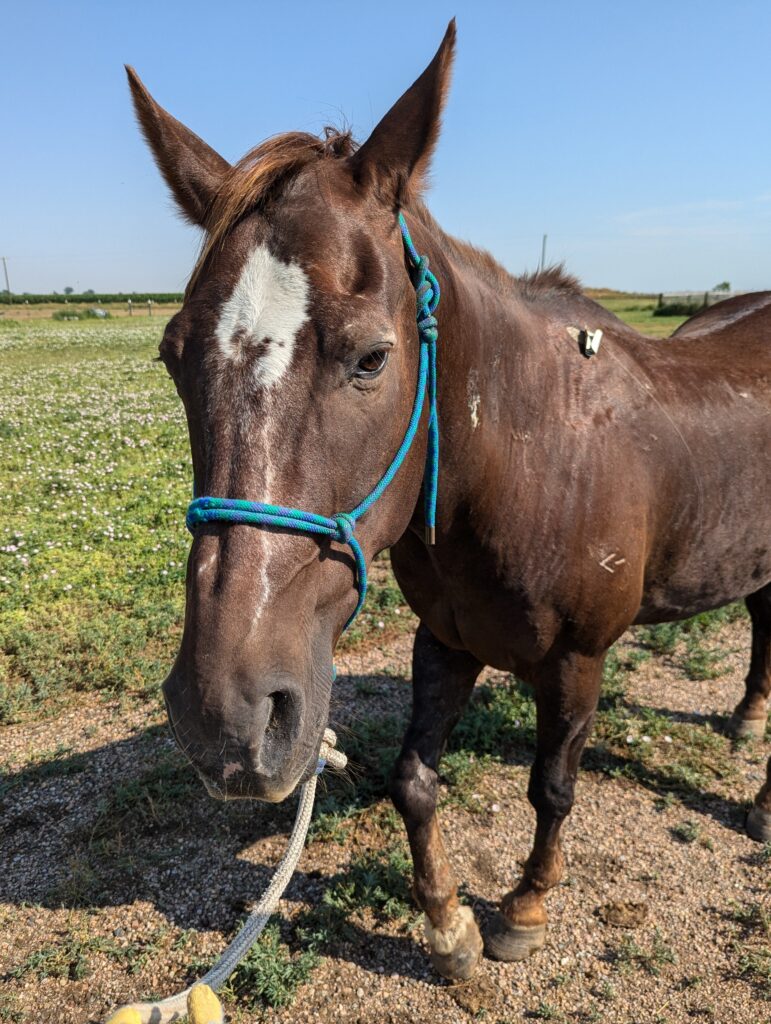
Gus is approximately 30 years old with apparent dental pathology noted during a brief buccal palpation. He has a brand on his left shoulder and a moderate squamous cell carcinoma (SCC) lesion at the lateral canthus of the sclera with approximately 1mm of projection into the corneal tissue.
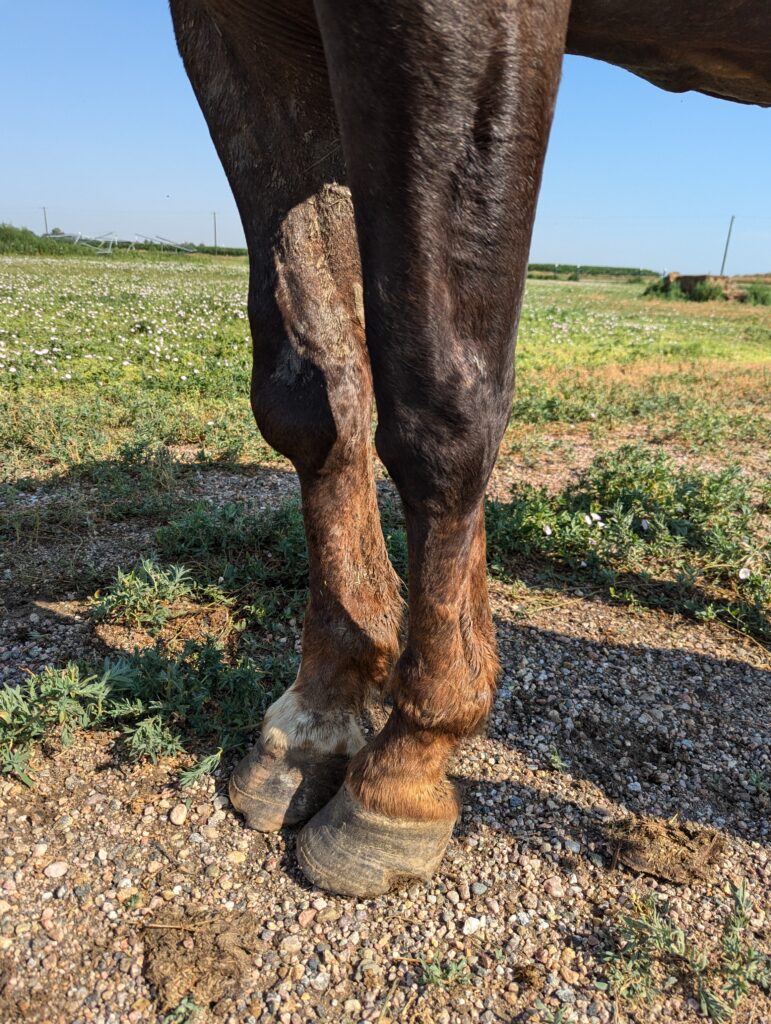
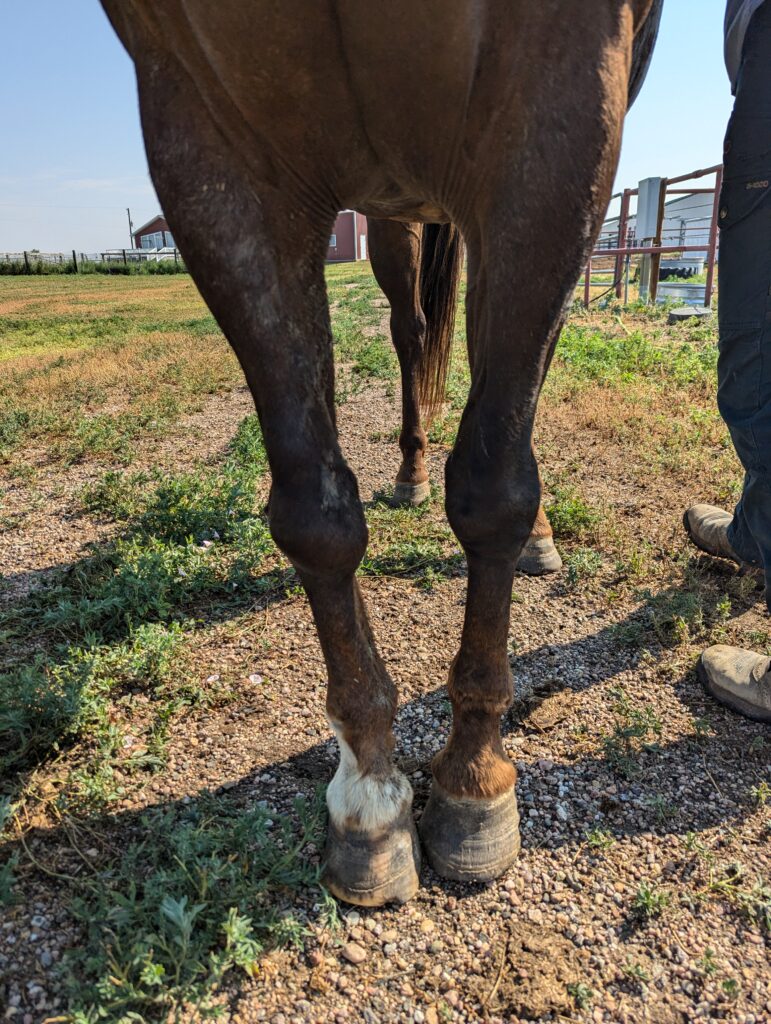
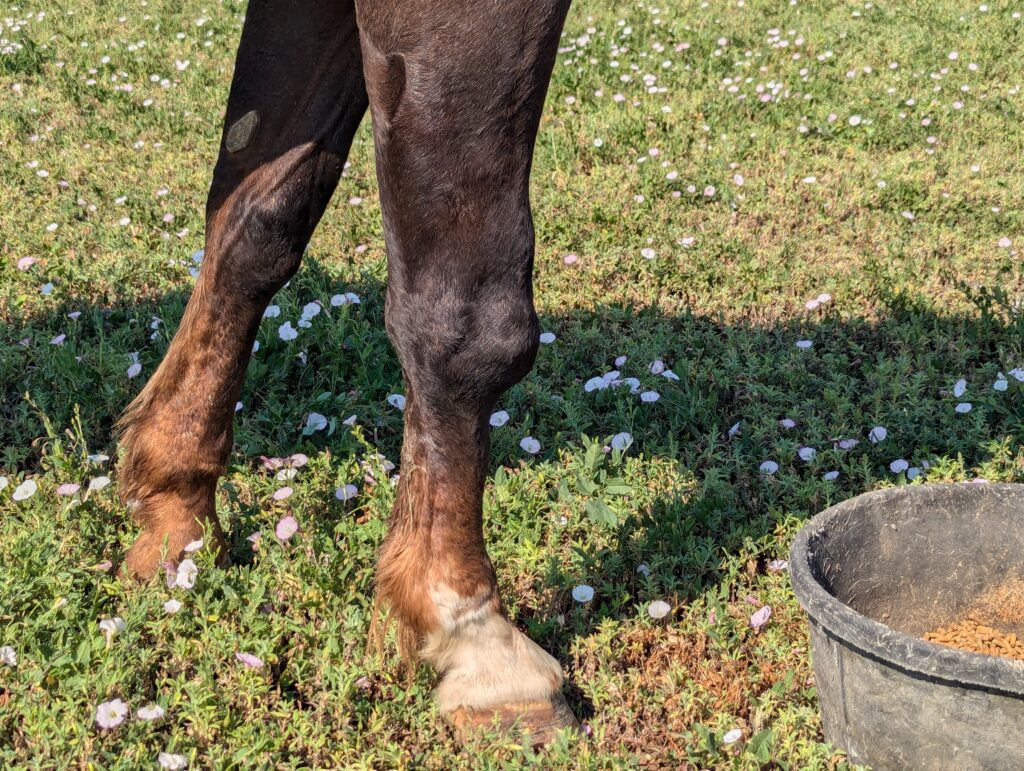
Both carpi are visibly deformed in the cranial and lateral directions. Both carpi palpate as soft and firm swellings over the entire carpal region, tracking up the right lateral leg over the radius about 3 inches. Each carpus has reduced range of motion (ROM), with right greater than left. The right carpus cannot flex to 90 degrees or less. The left carpus can flex slightly more acute than 90 degrees, but both are flexion positive at the end of ROM, as indicated by Gus’ reaction to the slight pressure.
There is compensatory bilateral muscling of the caudodorsal cervical musculature due to chronic front limb lameness.
Xrays revealed the following:
Each carpal view (lateral and DP of both carpi) show advanced, chronic, and aggressive bony remodeling of all carpal joints. The right carpus has much worse pathology, with all three joints remodeled with moth-eaten radiolucencies on the medial aspect of the middle and distal joints, with invasion into the medial canon bone, suggesting a former septic joint.
This level of pathology may have been caused by a puncture, fall, degloving, or septic events, or some combination of these. Radiographic evidence supports the level of lived pain limitations noted in the physical exam.
Due to poor ROM and discomfort with gentle flexion pressure, Gus is unlikely to have laid down for months, if not years, due to the limited flexibility this type of pain dictates. His SCC lesion of the left eye has invaded the cornea, and while squames are common at altitude in Appaloosas, Gus’ is considered risky to treat at this advanced stage, and it creates chronic pain and inflammation of the eye, a sensitive organ with complex issues.
Gus was provided with humane euthanasia to end his prolonged years of suffering. It is a disgrace that any horse should end up this way. Thankfully we could give Gus a caring, compassionate and humane end to his life.
More About Gus
- Success Story
- Liver Chestnut
- Gelding
- 1995
- Appaloosa
- Colorado