
Gulliver

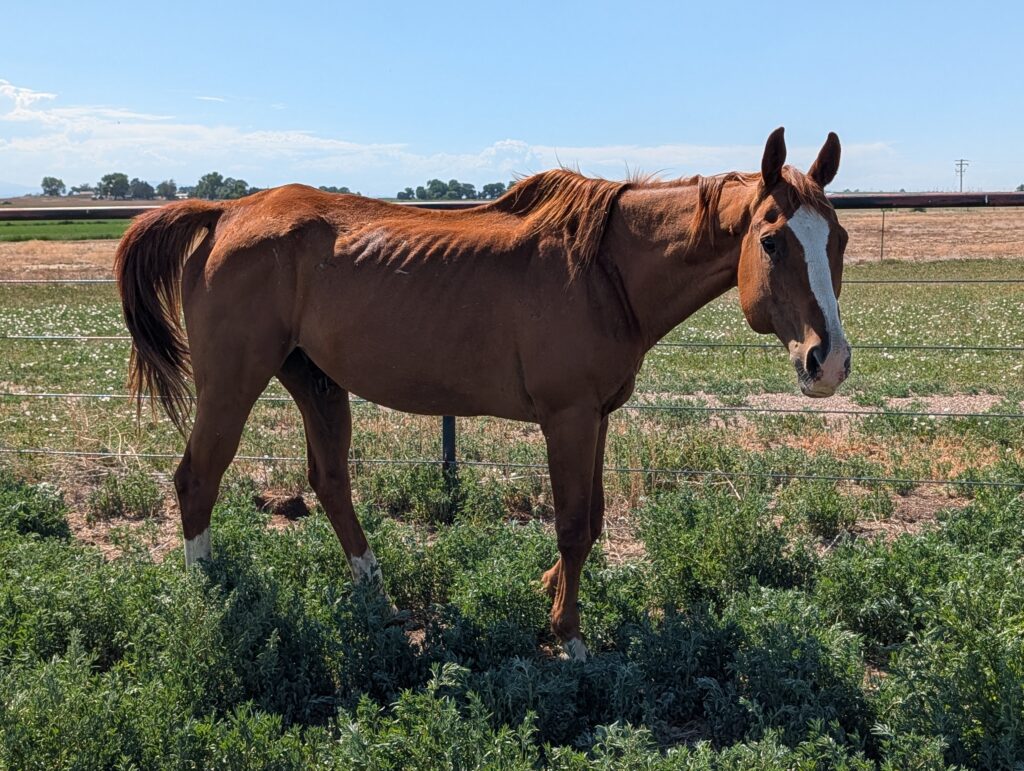
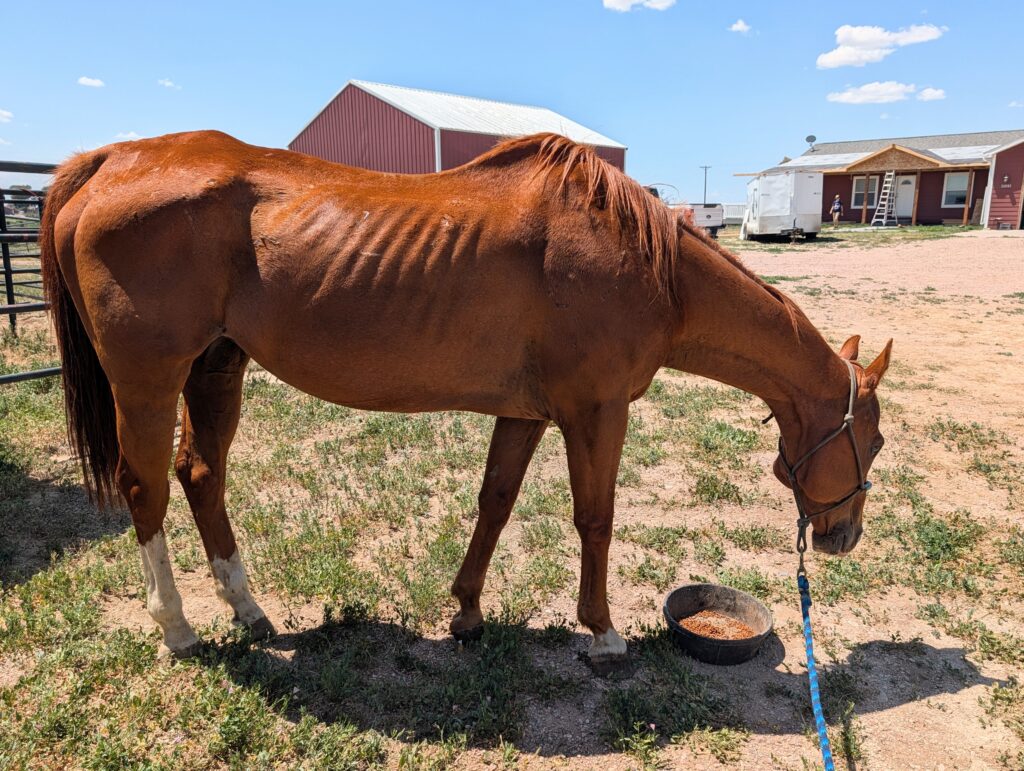
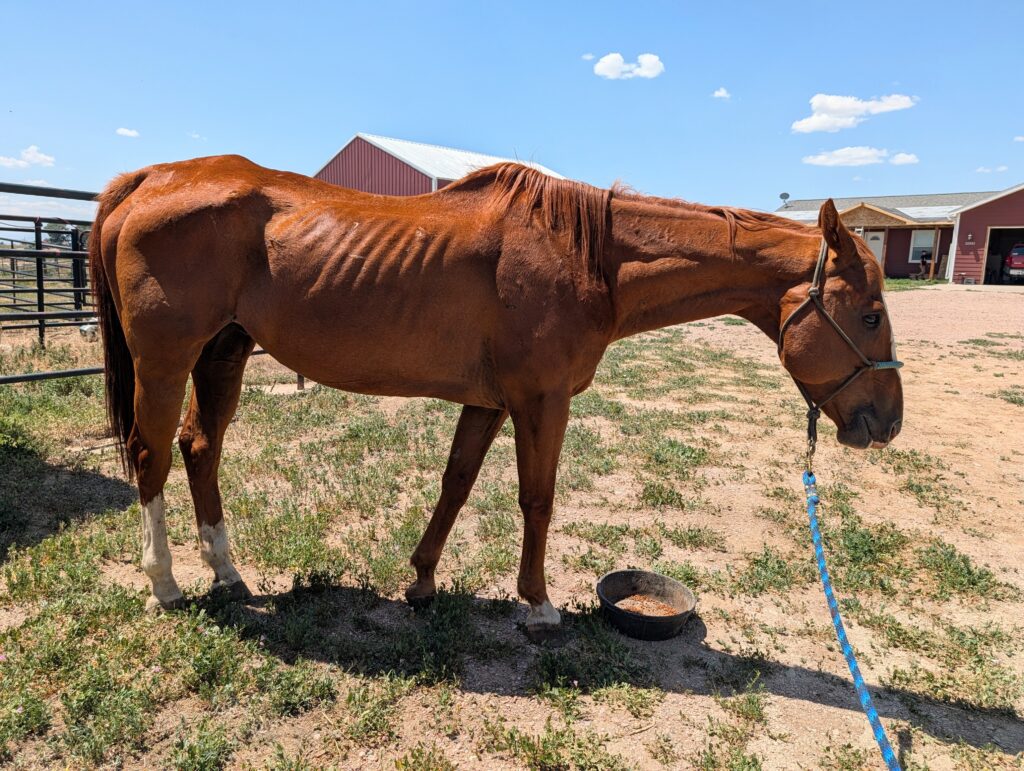
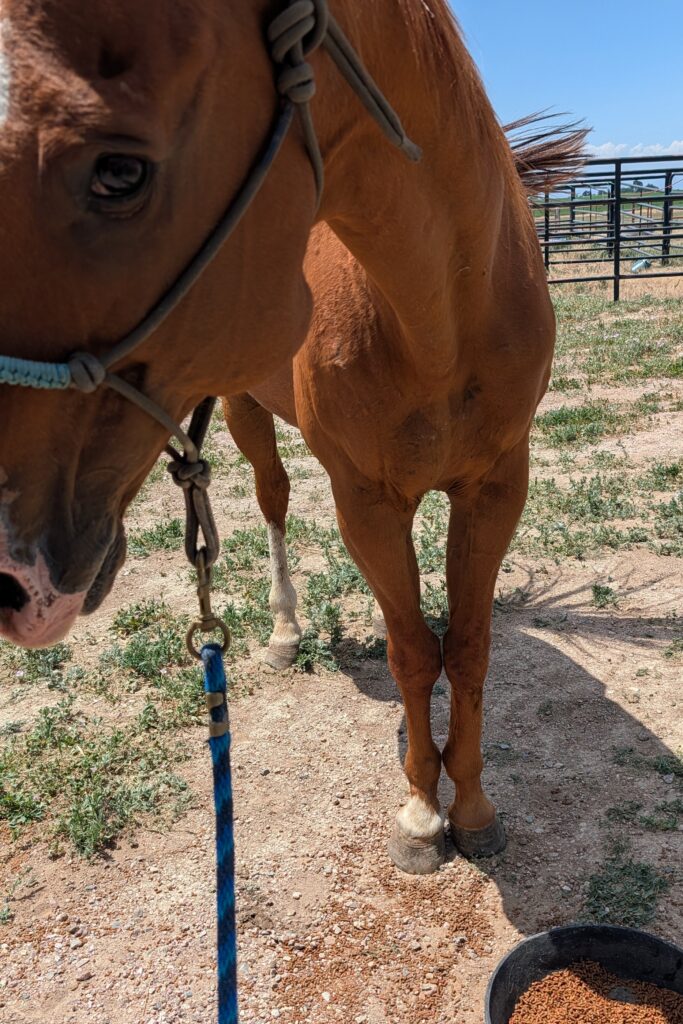
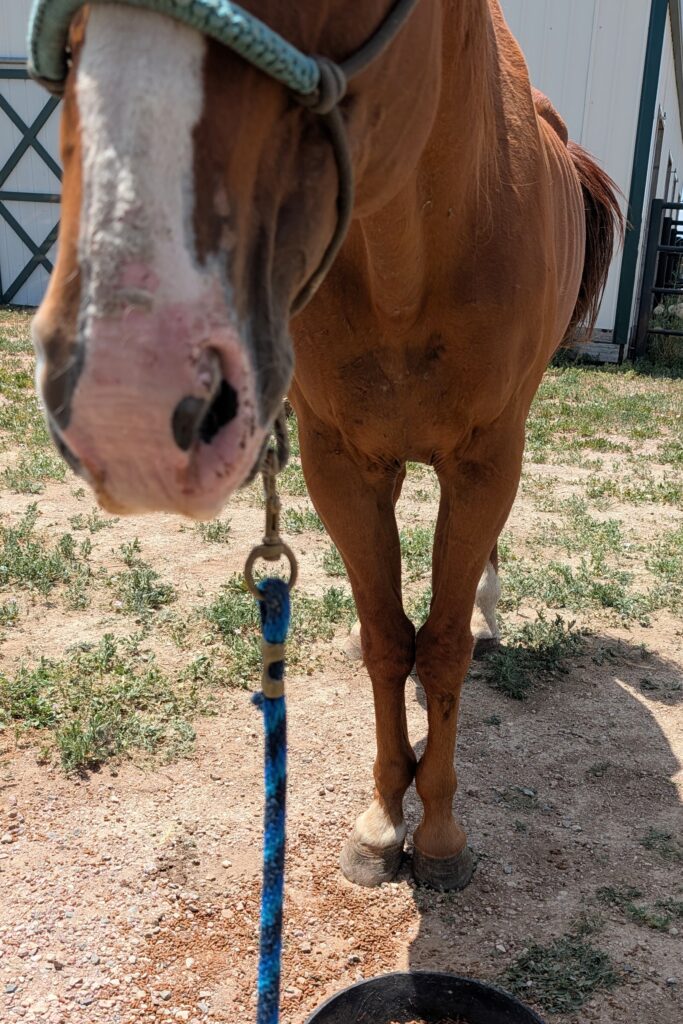
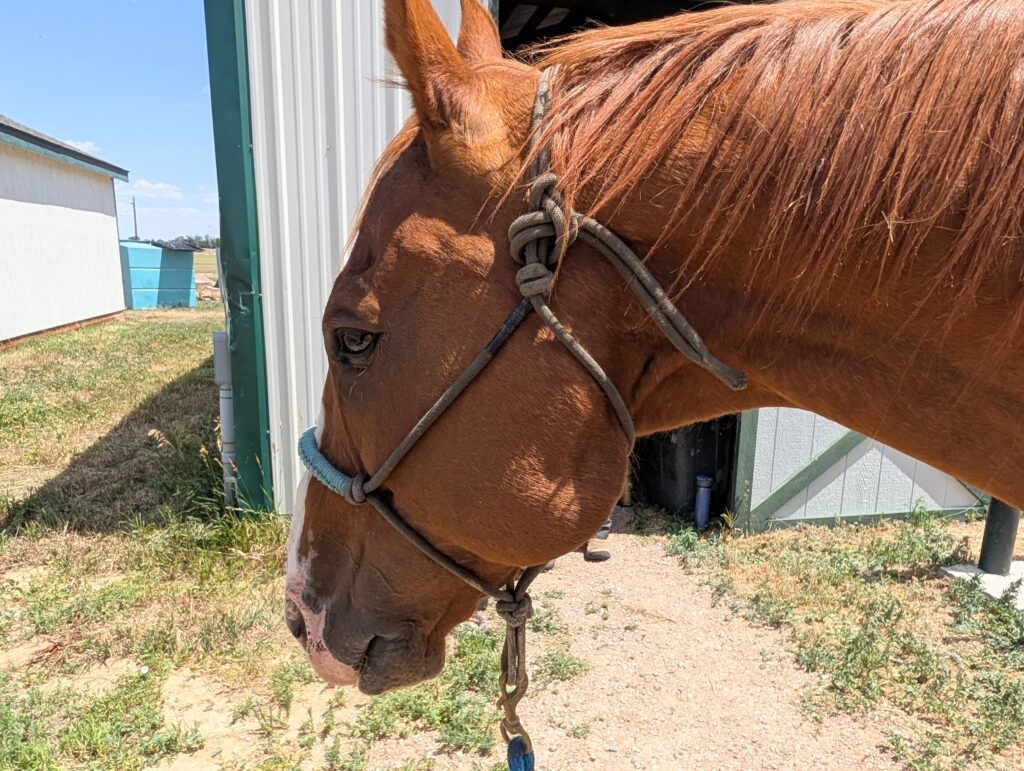
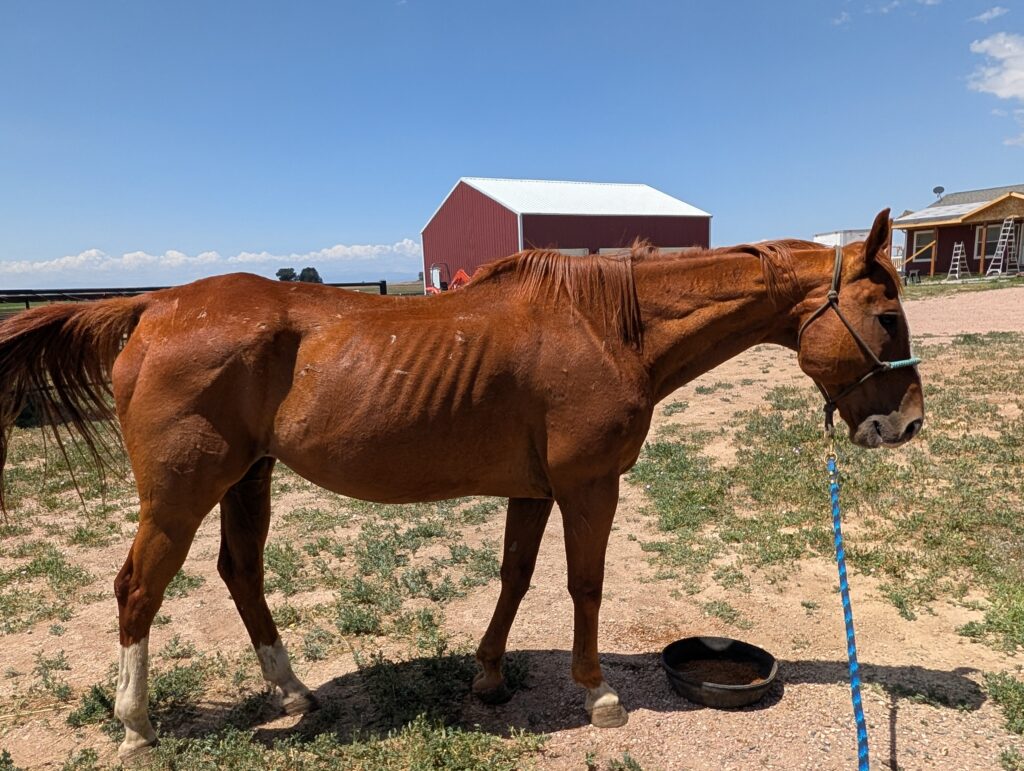
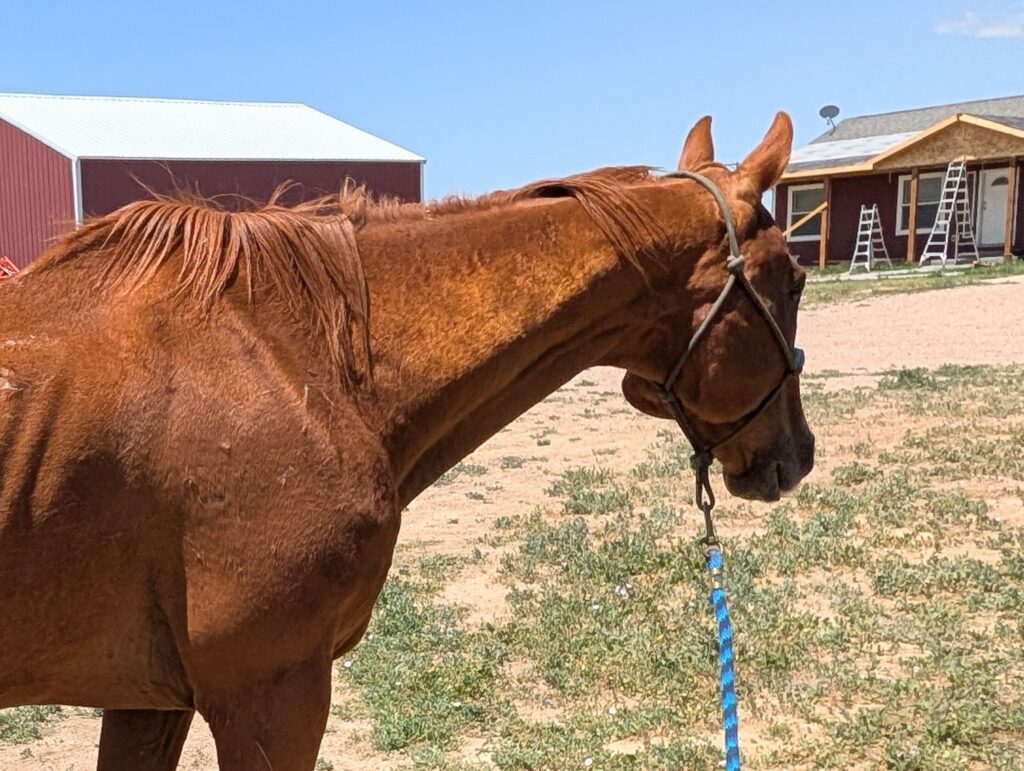
Gulliver was rescued during July 2026 to prevent him from entering the slaughter pipeline or ending up further neglected as his former owner had literally dropped him off with another horse at a trader/buyer’s lot.
Input from Gulliver’s initial veterinary exam and evaluation included:
“Gulliver is an approximately 18 year old chestnut Thoroughbred gelding without a lip tattoo who was rescued with his bonded friend, a small mustang mare.
On a visual exam, Gulliver has an extreme loss of condition, prolific scarring and superficial dorsal wounding to his back and haunches. Severe weight loss indicates poor nutrition (insufficient volume) or malnutrition (insufficient nutrients), or exposure to toxins that may precipitate parallel disease states.
Gulliver has moderate sunburn damage to his large facial blaze, worsening as the blaze traverses rostrally, with scabbing, blood clots, with hyperemia skin at the blaze margin around his nostrils and upper lip. The blaze sunburn is caused by a short list of serious problems as suggested below:
1) a genetic collagen disorder called HERDA which causes progressive collagen breakdown and accelerated skin damage in mostly quarter horses and paint breeds. UC Davis provides a reliable genetic test, and it can occur in breeds without these two breed influences.
2) Photosensitization (likely in Gulliver’s case)
a. Primary Photosensitization (Type I):Caused by the ingestion or contact of plants containing naturally photodynamic agents (e.g., St. John’s Wort, buckwheat, or spring parsley). The compounds circulate directly to the skin.
b. Hepatogenous Photosensitization (Type II/III): The most common and dangerous form in horses. It results from liver damage or disease. A healthy liver usually excretes phylloerythrin (a byproduct of chlorophyll digestion) via bile into the intestines. When the liver is damaged, it fails to clear this compound, which then accumulates in the skin and reacts violently to UV light.
Gulliver shows likely hepatotoxic clinical signs, and this is a top differential that may have contributed to Gulliver’s weight loss, skin lesions, and severe blaze sunburn.
Gulliver’s left mandible is visibly and palpably deformed, both bony deformation of the bone rostral to the ramus and with muscular atrophy of the masseter. He comes with a reported history of formerly wearing an overly-tight cribbing collar. His front teeth do not show signs of wear. He was not seen cribbing in the steel-fenced pen, but he later cribbed on a wood stall door when temporarily confined while his bonded friend was undergoing evaluation.
The mandibular changes suggest an overly-tightened cribbing collar which may have stopped this addiction to dopamine self-release while wind-sucking, but a collar that creates wounds or deformation of muscles or bones is abuse.
Wind-sucking behaviors are destructive to property and can be a dental concern, but it is this clinician’s belief that all attempts to block this behavior are cruel, as cribbing is a learned or developed habit that becomes a dopamine addition–a means of self-soothing.
Gulliver’s body condition score (BCS) is 3/9 where he is underweight with all ribs visible and muscle atrophy around the spinal extensors and tuber coxae hip bones.
He walks 4/5 lame on the left front leg, and rests the leg in partial weight-bearing stance when at rest. Both left and right forelegs are mildly valgus (bending laterally from the knee in the two-dimensional plane) and fetlock joints, as well as mildly rotationally turned out in the three-dimensional plane. Both forelimb hooves collapse medially giving a “flat-footed” appearance with significant lateral flare of both lateral hoof walls.
Gulliver’s left fore pain may result from rotational and valgus limb forelimb deformities, or secondarily from wearing unevenly on joints or bearing shearing forces.
Xray views were obtained and results showed:
Lateral and DP (frontal) views show suggestive changes consistent with navicular syndrome or caudal heel pain; sclerosis and irregularity of the caudal flexor surface in the lateral view, with the DP showing medullary channeling and cystic lesions as a secondary finding not typical of this view. H owever the post-mortem non-weight-bearing position of the image enabled a lucky view of the navicular bone that is typically obscured by superimposition of the other bones, P2 and P3. There is a small mineral opacity in the superficial digital flexor tendon proximal to the sesamoid bones seen on both views, indicating chronic inflammation or a healed tendon scar.”
Sadly, Gulliver represents the many horses who are ruined and cast off by irresponsible and/or ignorant (and even in some cases outright cruel) owners. How many of these people had the means to do the right thing and have a licensed veterinarian end their horse’s suffering before they are in a state of extreme pain and ongoing deterioration!
Gulliver’s bonded companion was also rescued by FRER, and sadly in very bad shape as well. They were humanely euthanized with compassion and dignity in a peaceful setting.
More About Gulliver
- In Assessment
- Chestnut
- Gelding
- 2008
- Thoroughbred
- Colorado