
Holly
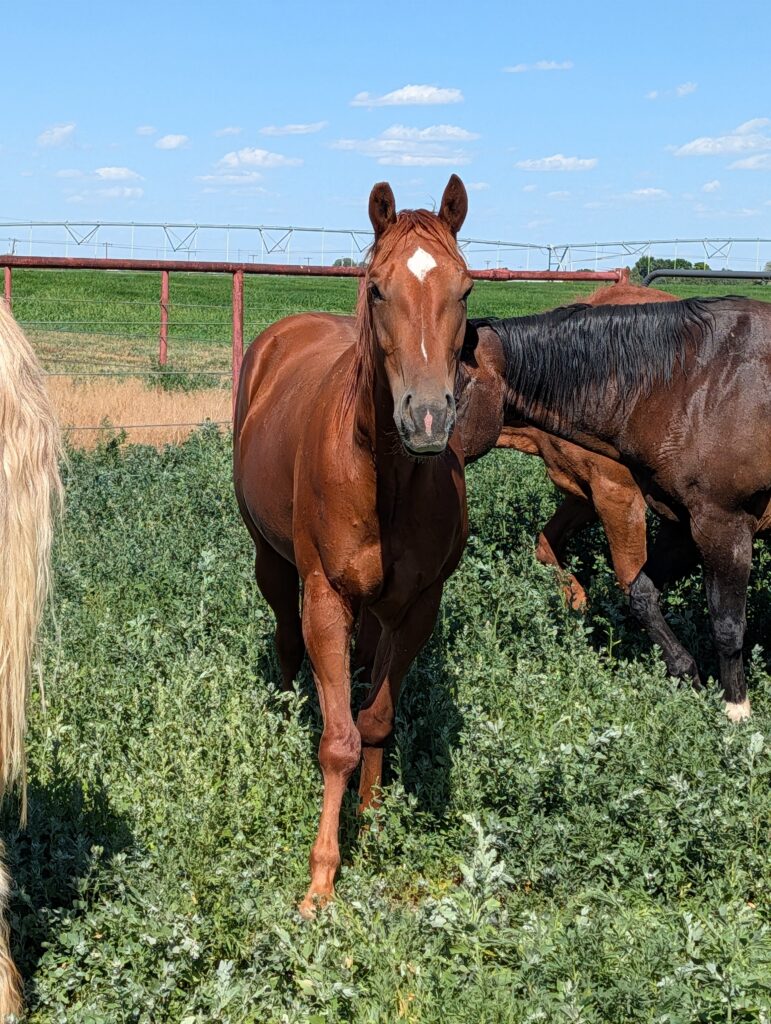
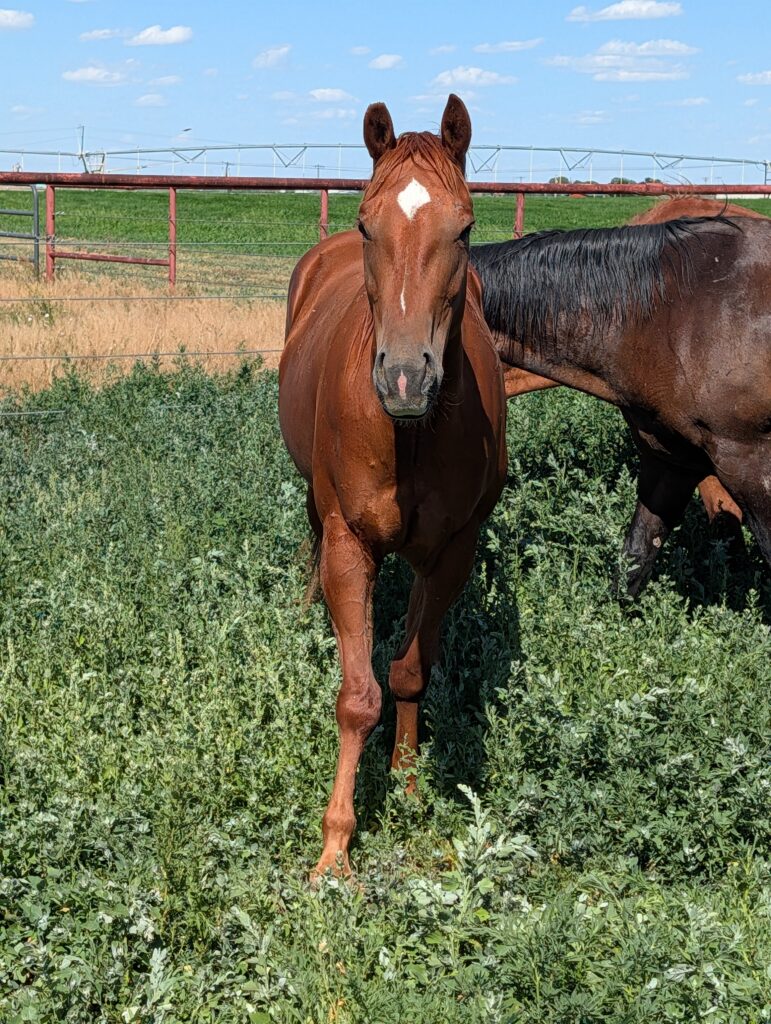
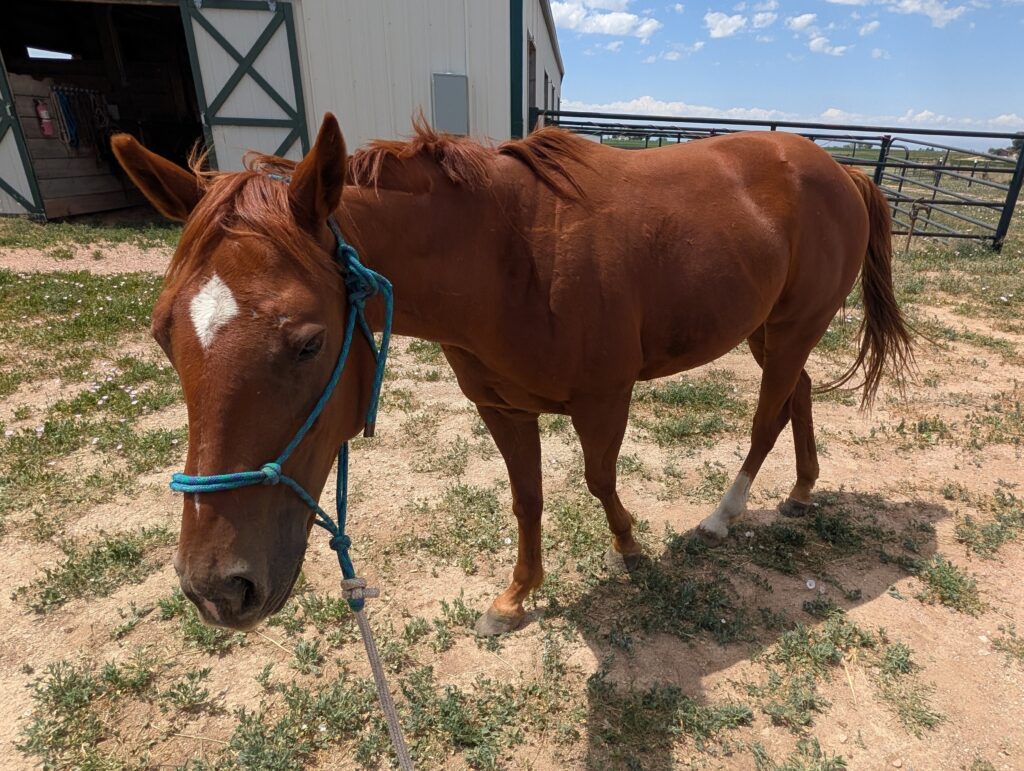
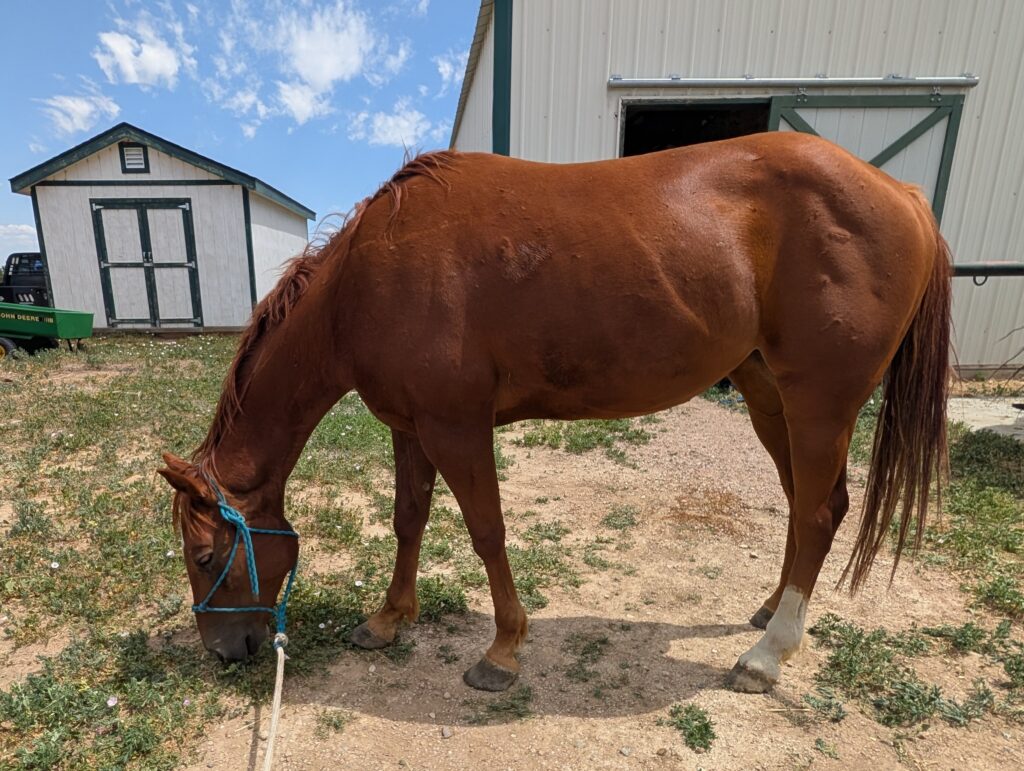
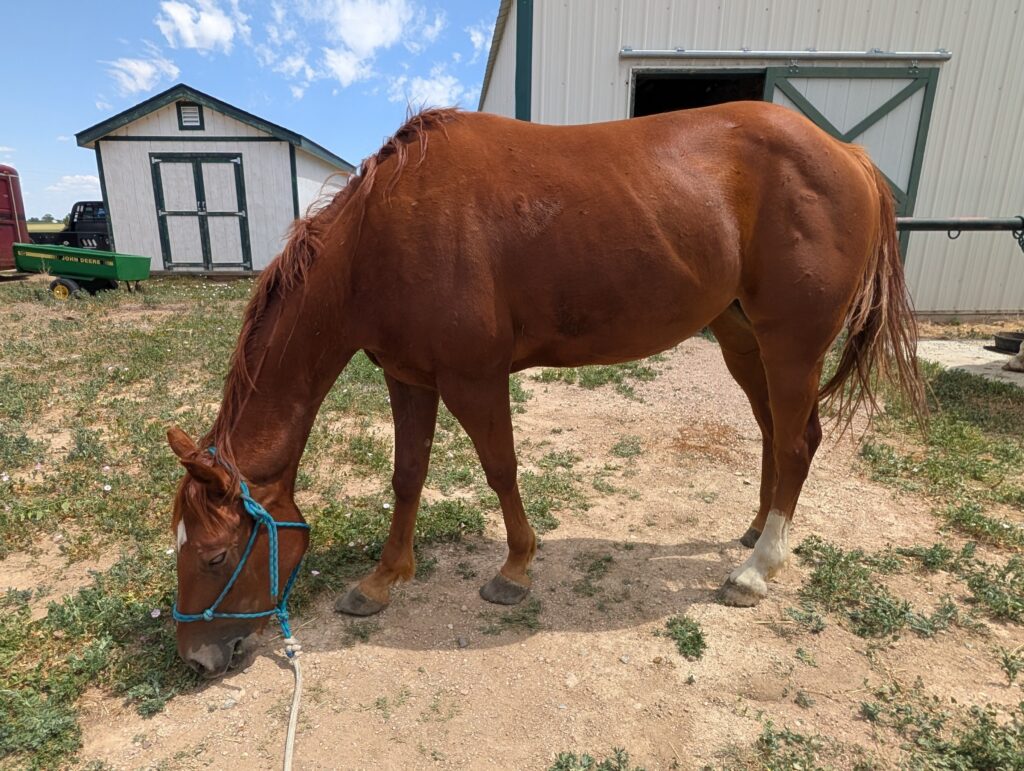
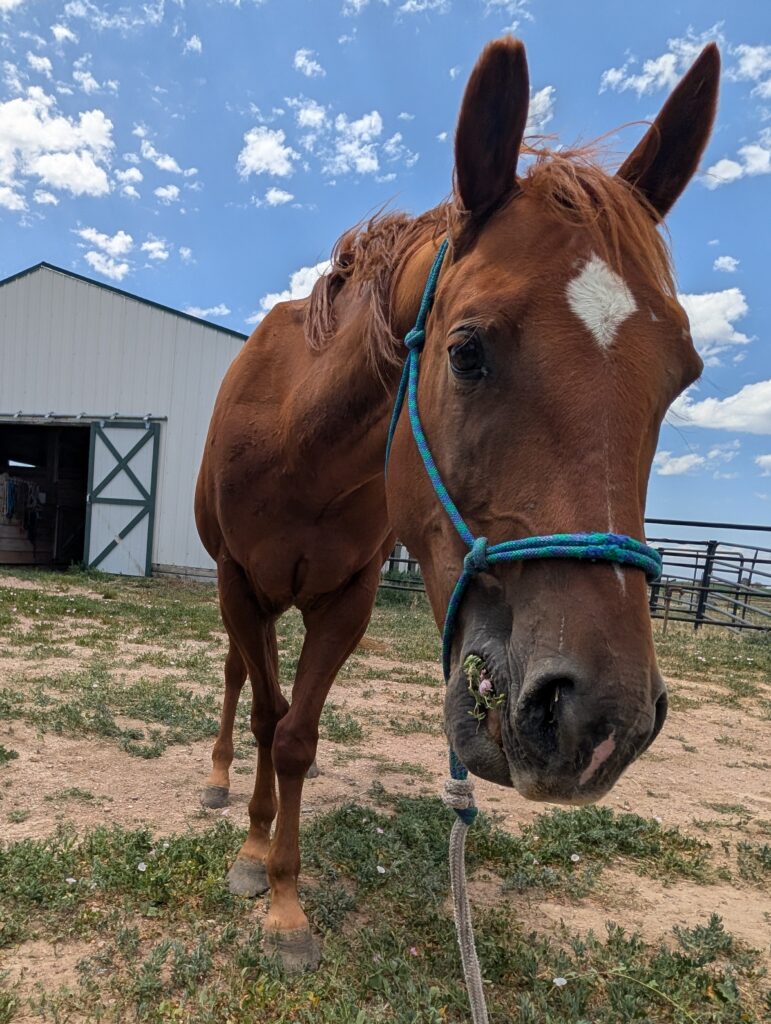
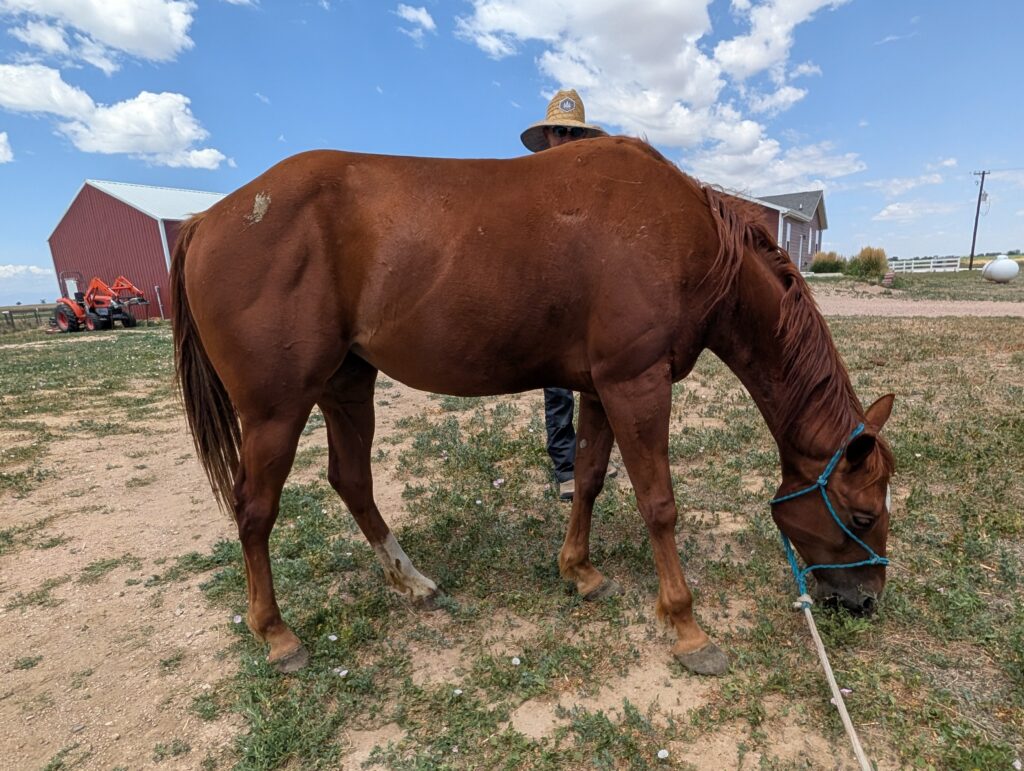
Holly was rescued during July 2026 along with a group of horses at risk of eventually shipping to slaughter (once the border reopens after closure due to threat of screwworm spreading). She’s friendly and in good weight, but crippled from what is likely a congenital issue from birth.
It is ironic that she did not receive medical attention at a much younger age, but did receive proper basic handling and desensitization.
A thorough veterinary exam and evaluation, including Xrays, provided the following information.
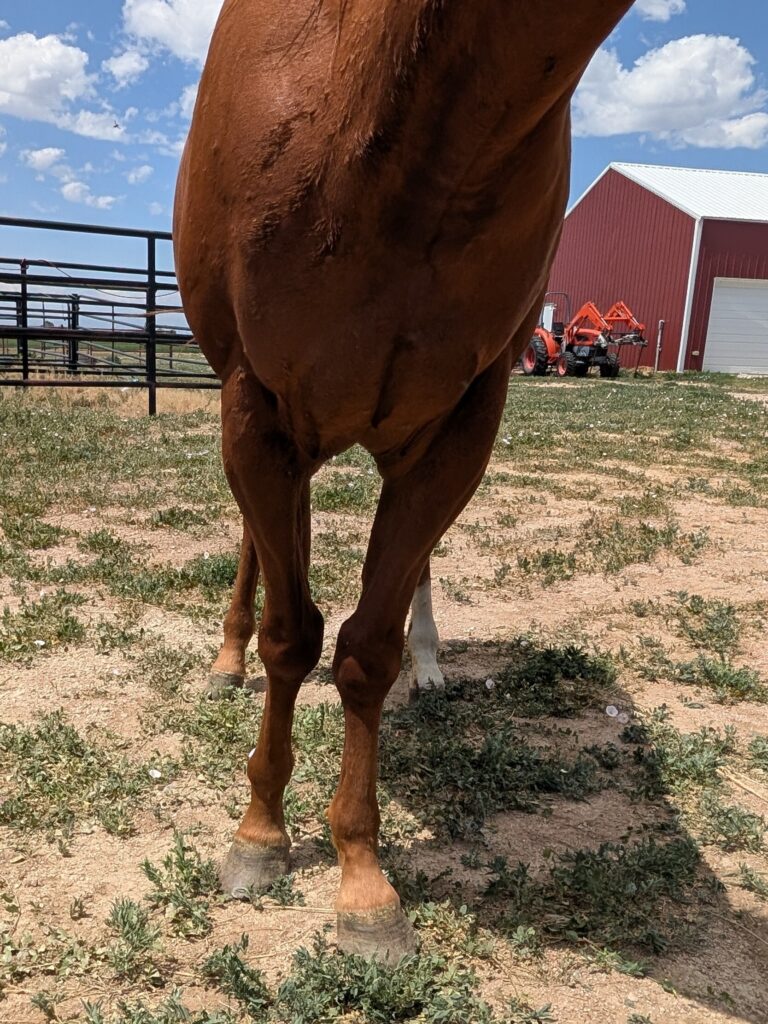
“Bilateral carpi (knees) are moderately affected by symmetrical angular limb deformities (ALD), which are congenital and may be treatable with splinting, hoof correction, and/or surgery prior to long bone growth plate closure around 2.5 to 3.5 years of age. Both forelimbs are equally affected with carpal valgus, where the distal limb projects abnormally laterally, as seen from the front.
Holly can walk and trot, but is only able to do so by altering the mechanics of limb travel by lifting the limbs laterally in swing phase to avoid the opposing limb’s midline-crossing carpus in the stance phase. There are no wounds or scars, indicating these legs may not have been treated with splints or other interventions. Both carpi have dorsal bony enlargements in the distal carpal structure, indicating possible inflammatory changes.
Her bilateral carpal range of motion is decreased by 50%, indicating poor quality of life for laying down, resting, or rolling.
Xrays show that the distal carpal bones of both carpi (knees) are misshapen and less tall than the upper carpal row of bones, with a bilateral dorsal bulge and osteoarthritic (OA) changes, with the most lateral of the distal carpal bones showing the “thinnest” profile. The distal carpal bone abnormalities, along with a wedge-like architecture creates non-parallel carpal bone stacking and non-parallel joint surface weight bearing, inducing carpal valgus in the frontal plane.
These anatomical differences are congenital, and may be altered prior to long bone closure. There is no radiographic evidence of surgical intervention (screw anchors, wires, plates or remnants of screw removal in the long bones). The abnormalities and changes seen radiographically provide a high fidelity visual representation of pathology seen grossly on exam.”
Because of the abnormality of her limbs and gait, compensation and “damage” to other supporting structures must be taken into consideration when reviewing quality of life.
Whether or not Holly could have been medically helped in the past is unknown, but what is clear is that she cannot continue with a chance for a quality of life and also a “safe” pain-free life. Holly was humanely euthanized in a peaceful setting with compassion and respect.
More About Holly
- In Assessment
- Sorrel
- Mare
- 2022
- QH Cross
- Colorado