
Sterling
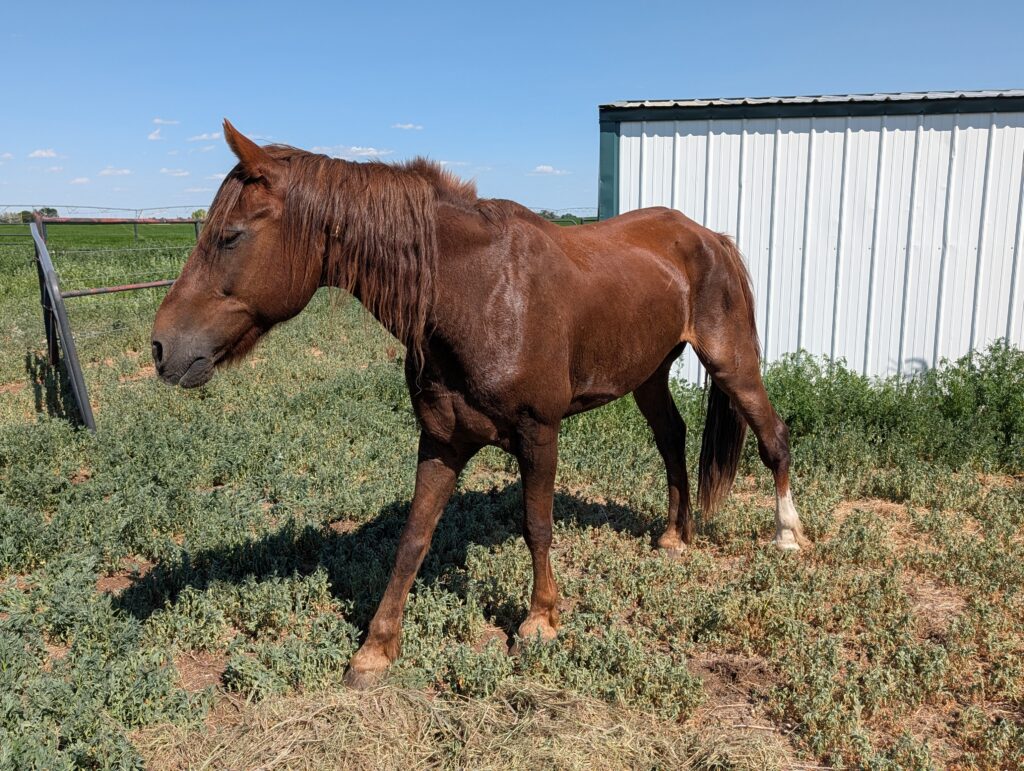
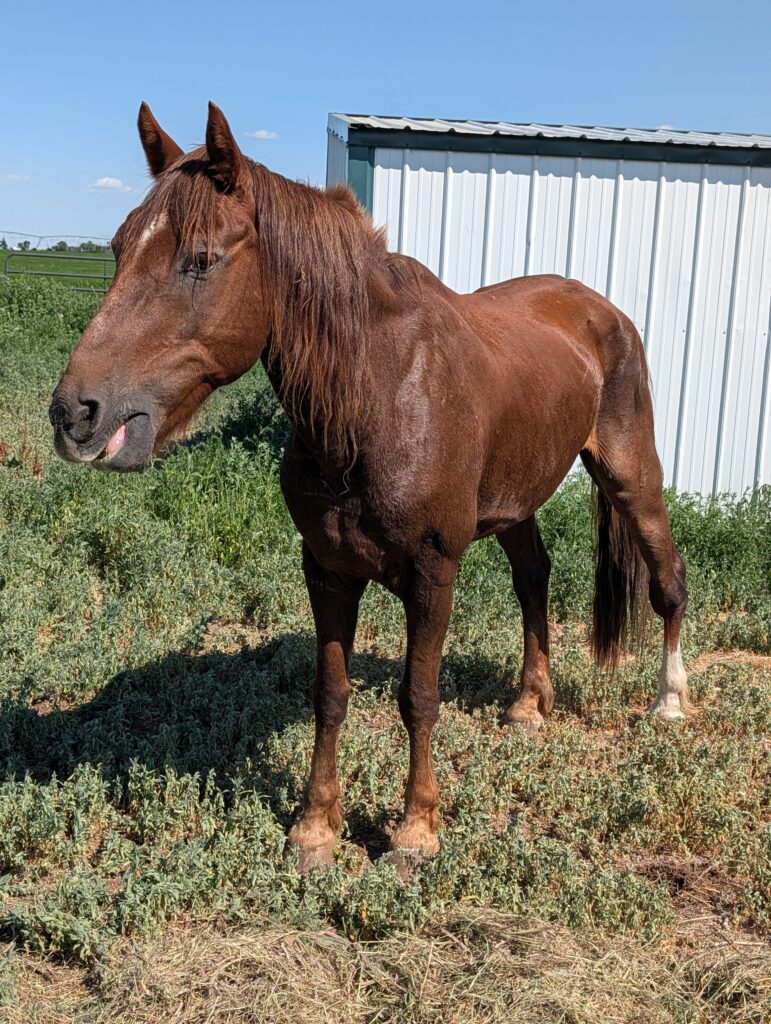
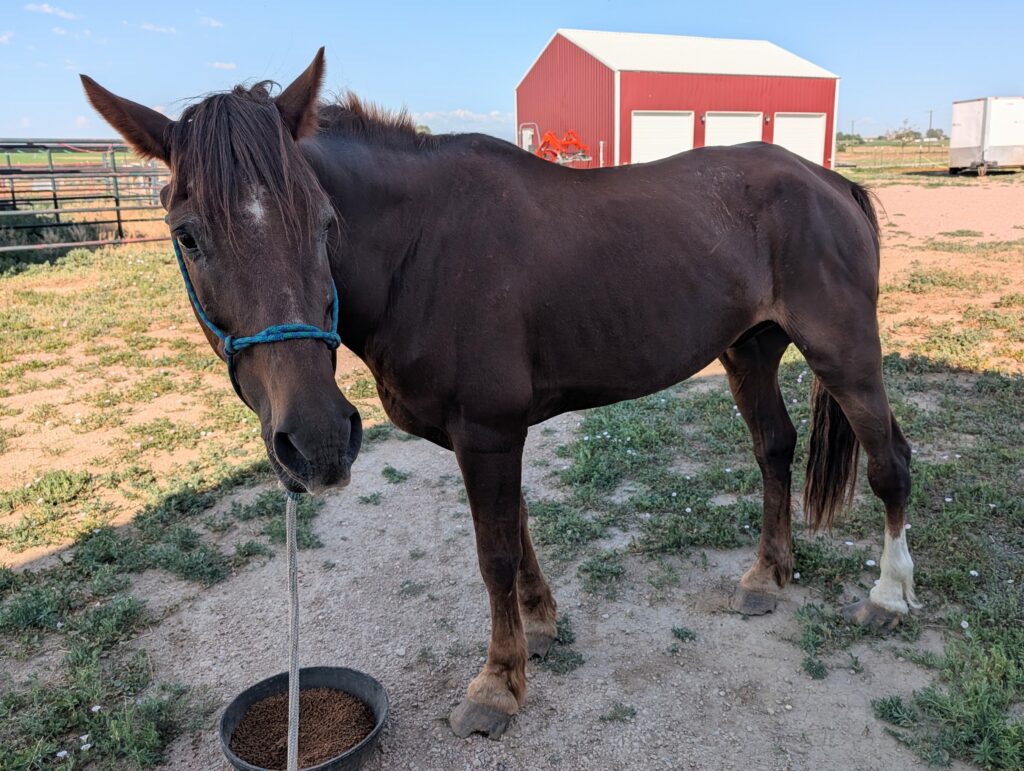

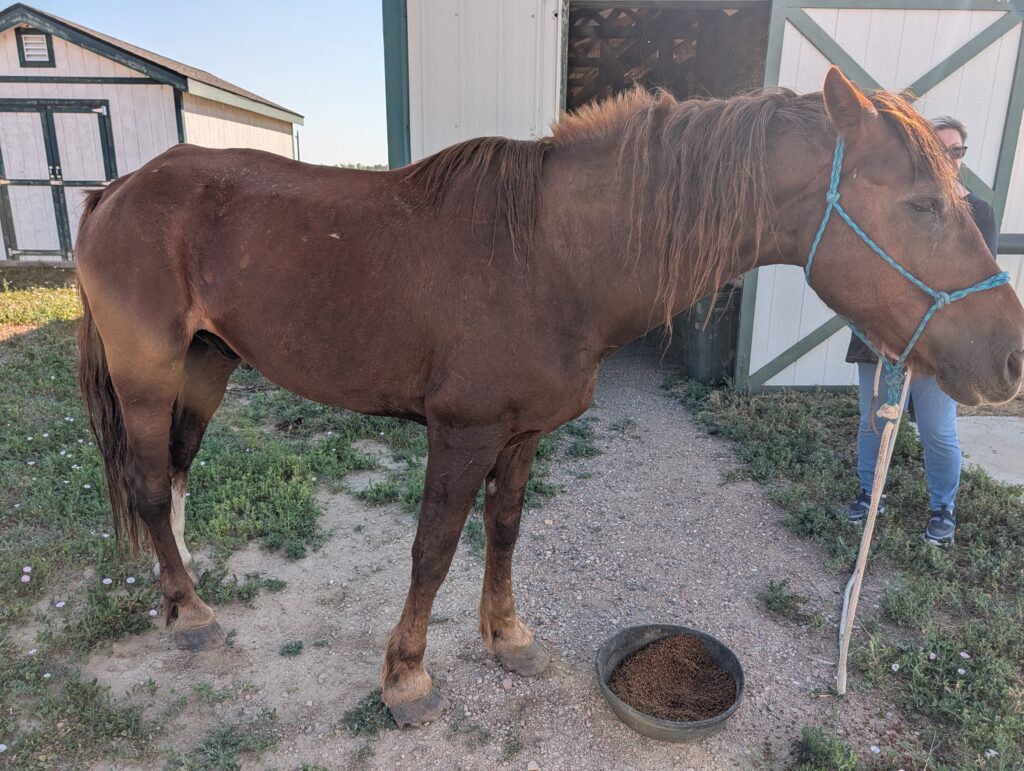
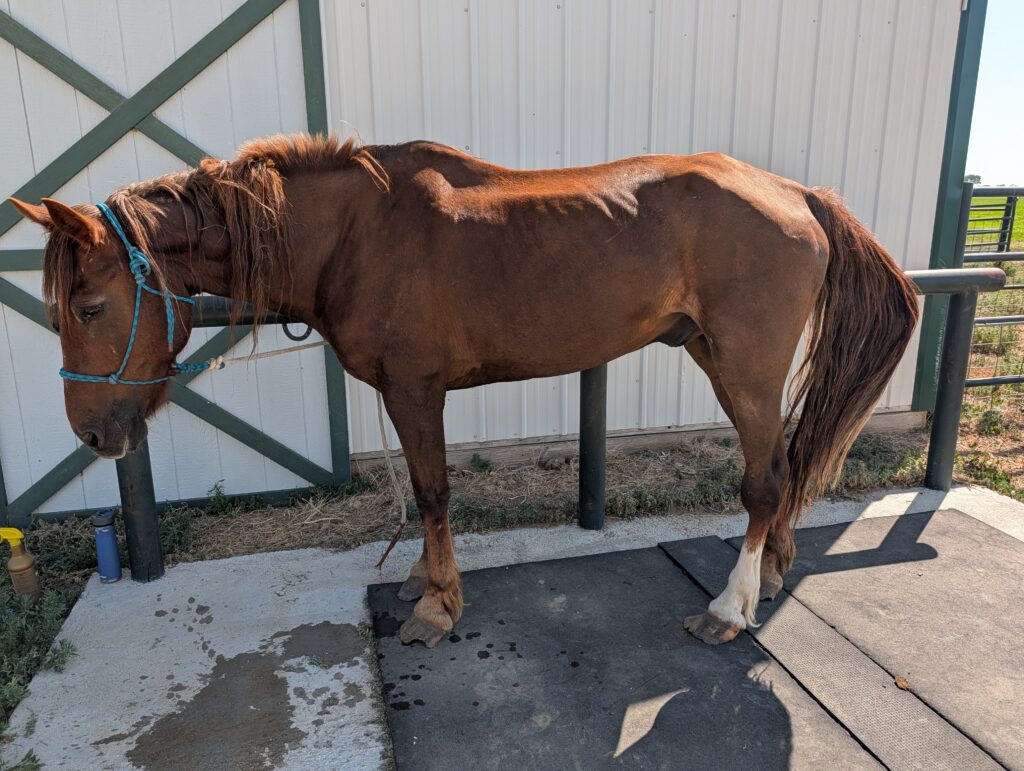
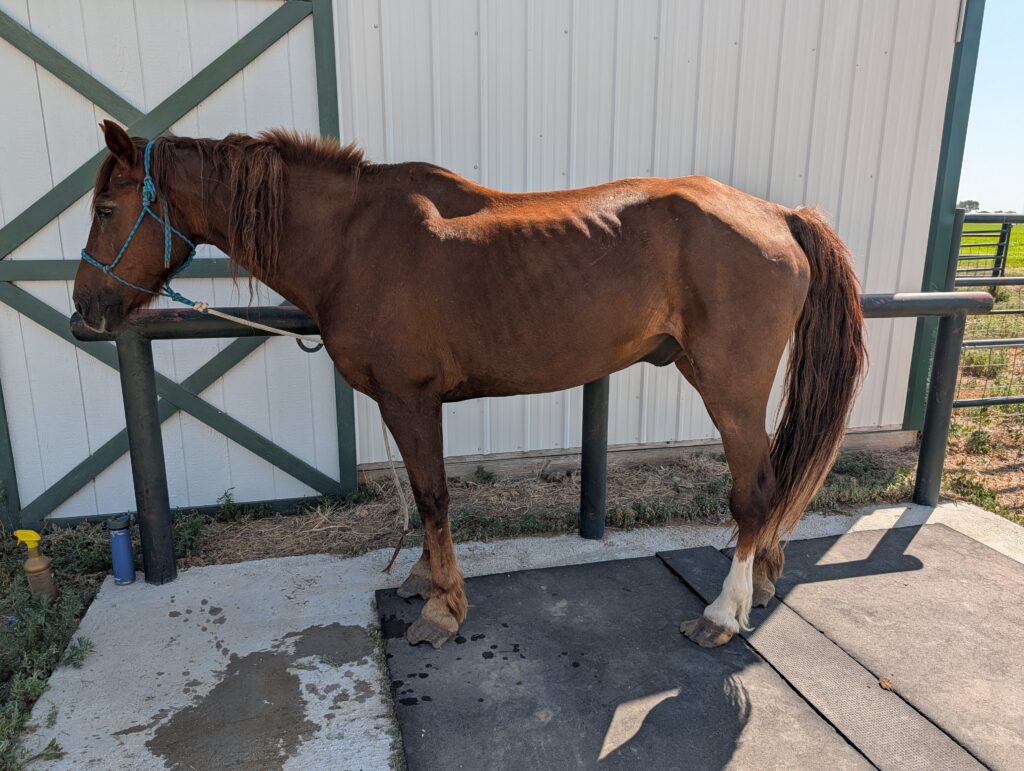

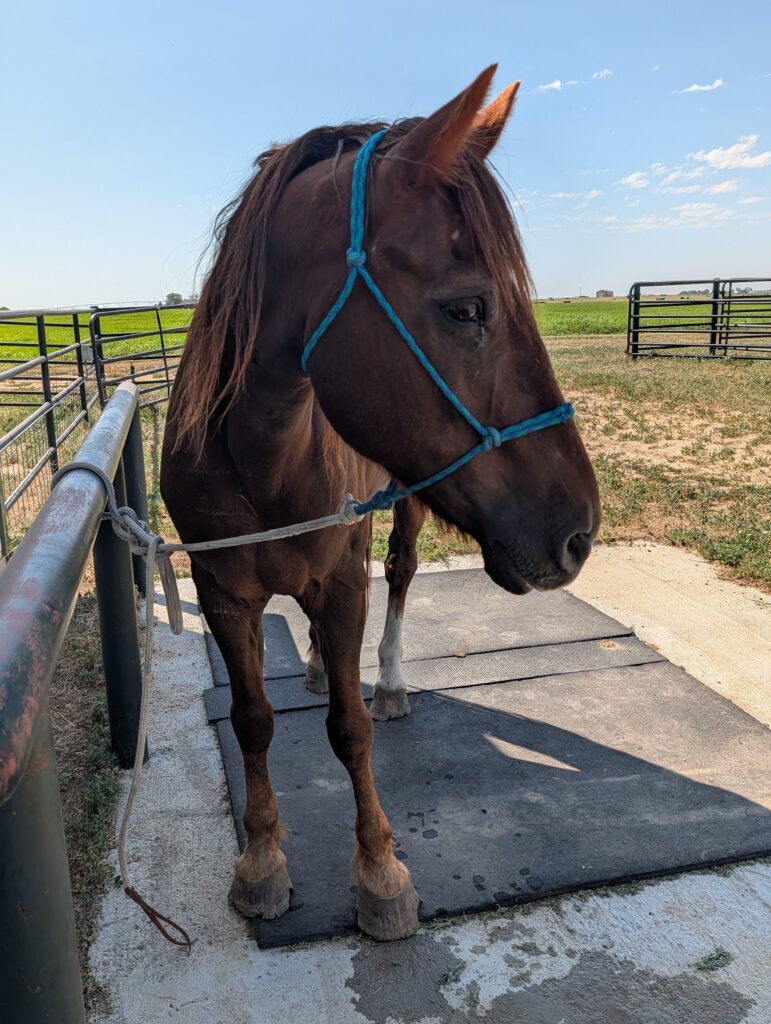
Sterling was rescued during July 2026 to keep him from further neglect and ending up in the slaughter pipeline.
It was clear Sterling had chronic lameness and other potential issues, but he was very outgoing and highly personable (nickering and playing with the hose when water tubs were being refilled). He was very happy to be hosed off on hot days, and then have a good roll in a dirt patch in the turn out area.
Veterinary exam and evaluation revealed further detail of past injury and trauma:
Sterling has a body condition score (BCS) of 3/9 and weighs approximately 890 lbs. He is a liver chestnut grade gelding with unknown history, approximately 20 years old based on dentition.
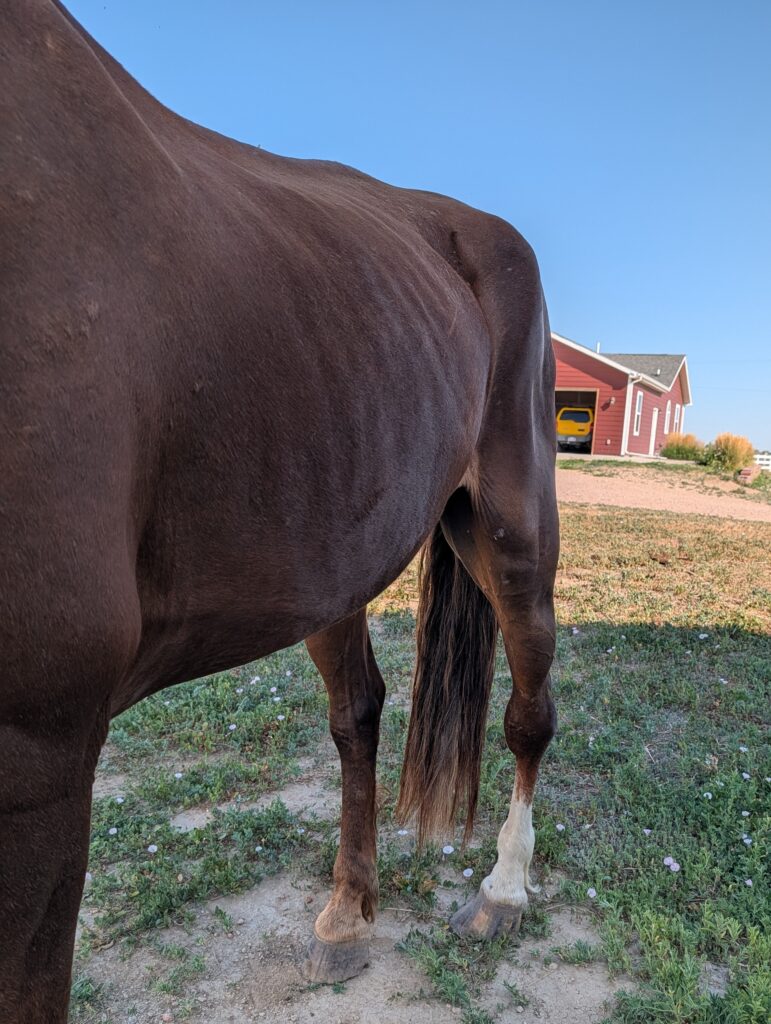
His left hock is grossly enlarged medially and laterally, with the axis of the leg bowing laterally at the hock,as visualized from behind. The left hind hoof is misshapen and both medial and lateral hoof walls flare medially.
Sterling’s right front fetlock is enlarged and palpated effusive, with an additional medial swelling of the metatarsal region corresponding to the medial distal “button” of the splint bone, which palpates as painful and elicits a withdrawal from Sterling. There are two oral ulcerations in the oral cavity, both caudal to the two lower corner teeth.
Xray findings:
“The distal terminus “button” of the medial splint is fractured but not displaced from the proximal portion of the bone. These injuries are common, and can be caused from the trauma of early work as a young, growing horse, from blunt force trauma from interference from the opposite hooves, or from any other trauma to this exposed part of a horse’s anatomy.
Most fractured splint bones are painful and require surgery to remove the fragment, as long as the first most proximal aspect of the “head” of the splint bone is not removed, as this high structure plays a crucial stabilizing role in the anatomy and function of the stacking of the carpal bones above. Chronicity is unknown with this fracture, but the additional ossification of the fragment to twice the diameter of the proximal fragment suggests years and not months.
The splint bone is held in place against the third metatarsal canon bone by a periosteal ligament, so instability is irritating and causes lameness long-term if not removed surgically.”
Xrays of hocks:
“All four tarsal joints are globally affected by massive articular cartilage destruction, absence, and either highly sclerotic underlying bone or proliferative bone.
This level of pathology over the entire four-joint structure is classic for septic or infectious joints, either caused by “joint ill” from sepsis as a foal or from a traumatic or puncture injury/laceration to the hock structures.
Hock joints sometimes, maybe, or never communicate with each other, so it’s be possible for a single joint to be penetrated, but infection invades them all through a common communication, or all joints can be separated from each other as separate synovial structures, but a longitudinal laceration or de-epithelialization invades all structures simultaneously.
The two most distal hock joints have almost no range of motion, but due to Sterling’s ability to ambulate at the walk suggests these distal joints are likely fused from the infection. The two proximal joints are high range-of-motion structures, so exercise (forced or permitted) may cause a great deal of discomfort.”
We were saddened, but not surprised, that Sterling did not have options for relieving his pain and that as with too many others, he could have been helped years ago at the time of initial trauma and injury(ies).
Sterling was humanely euthanized in a peaceful and compassionate setting.
More About Sterling
- In Assessment
- Liver Chestnut
- Gelding
- 2006
- QH Cross
- Colorado