
Jazzman
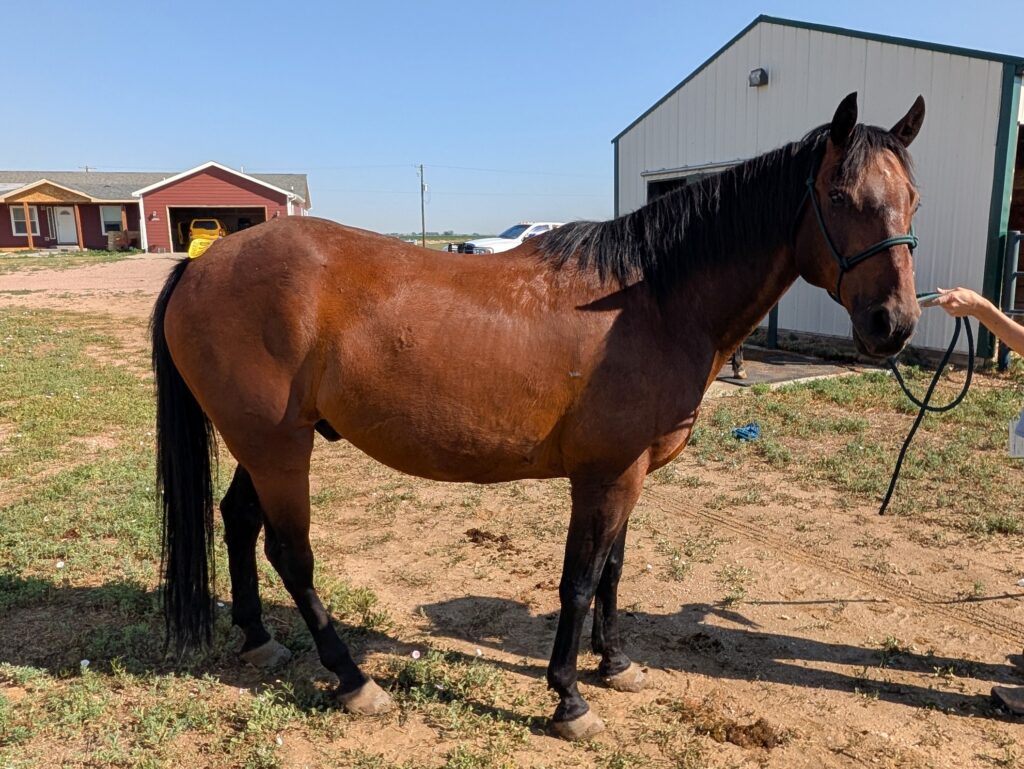
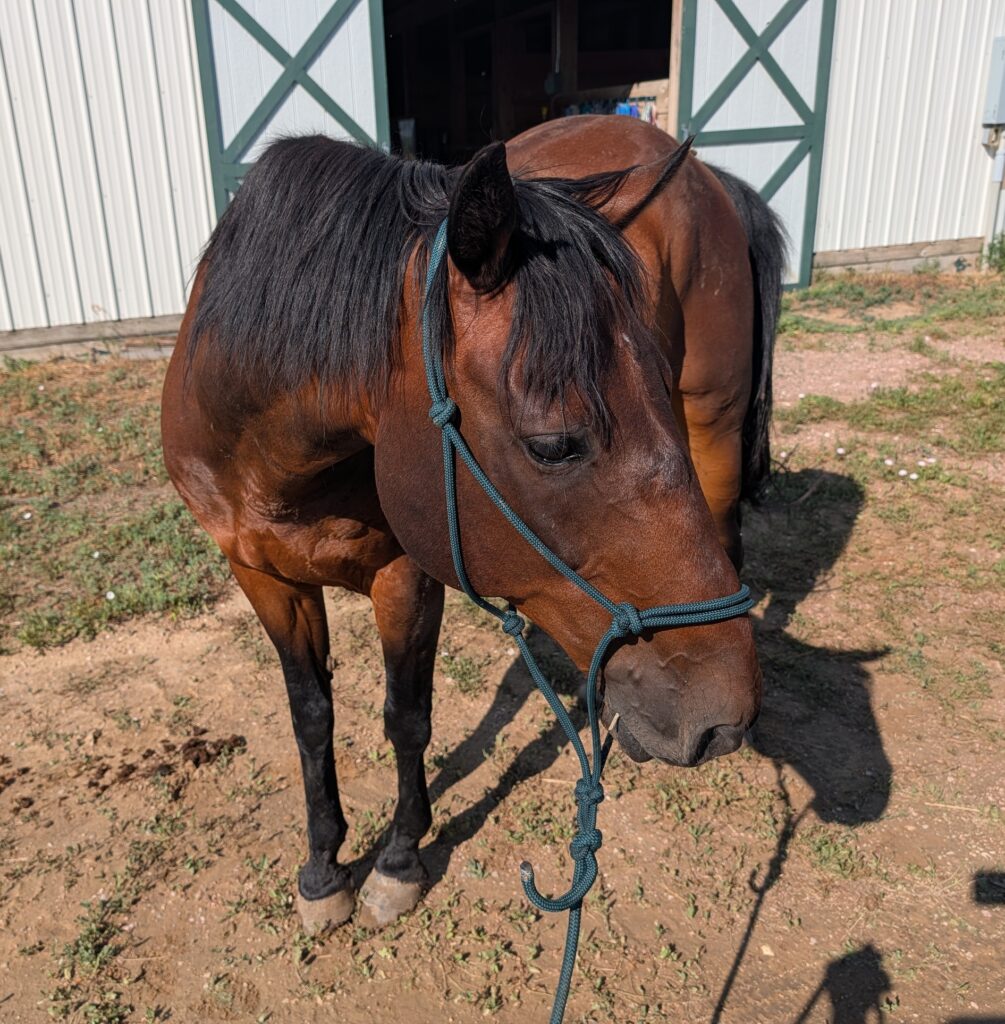
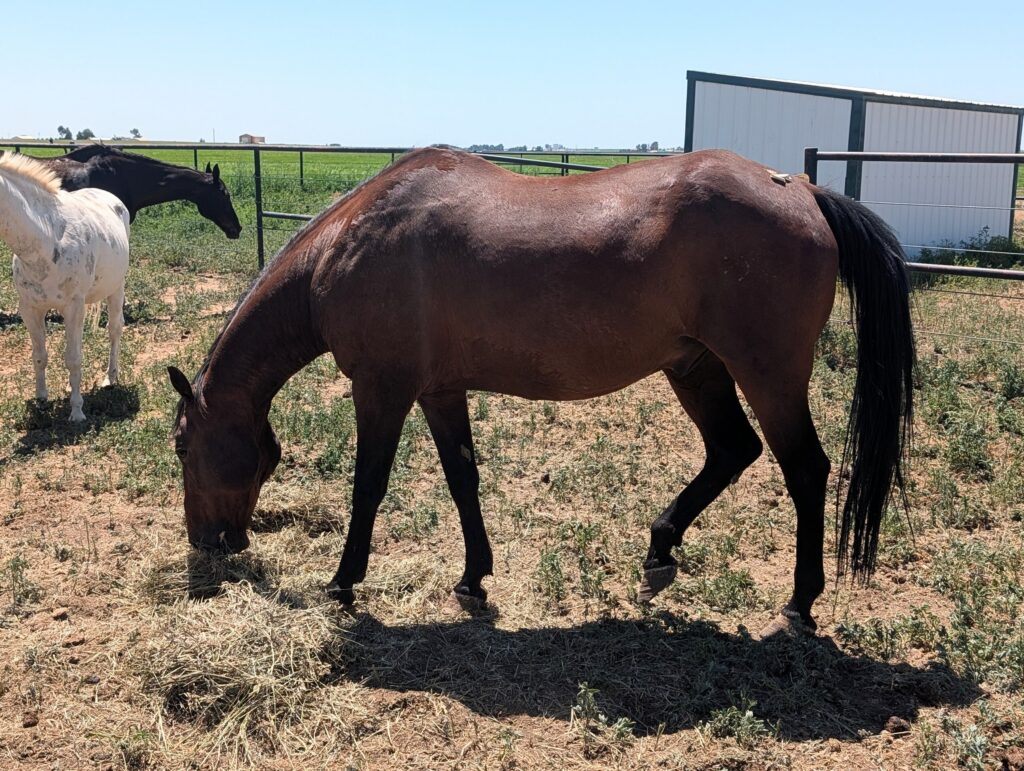
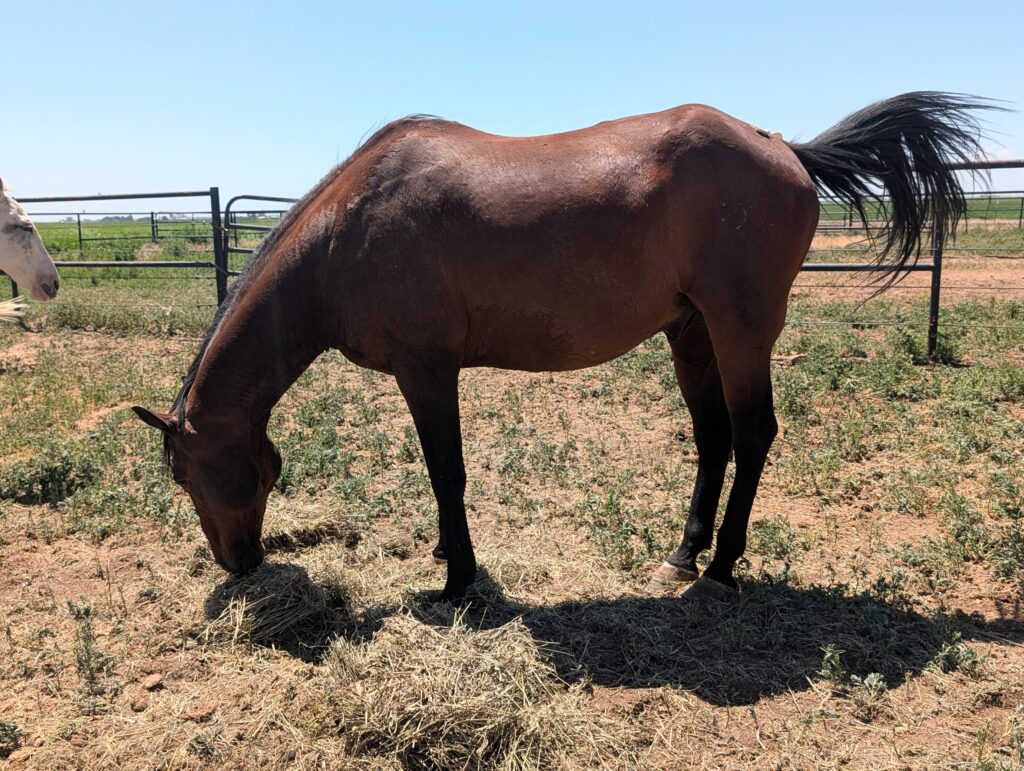
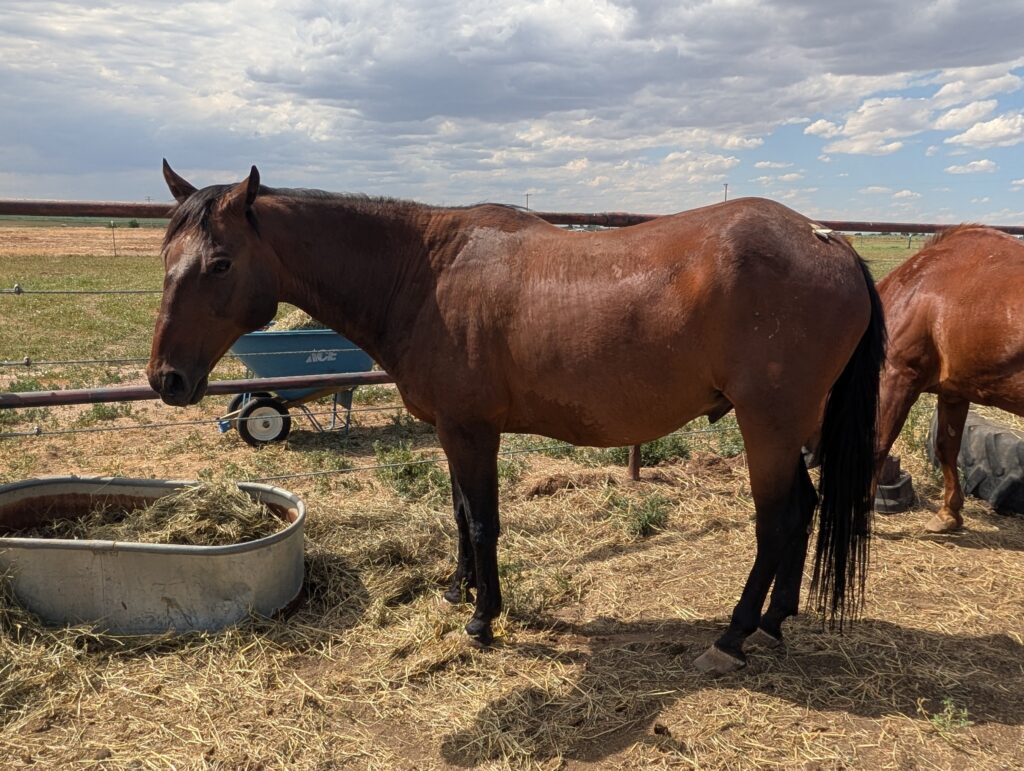
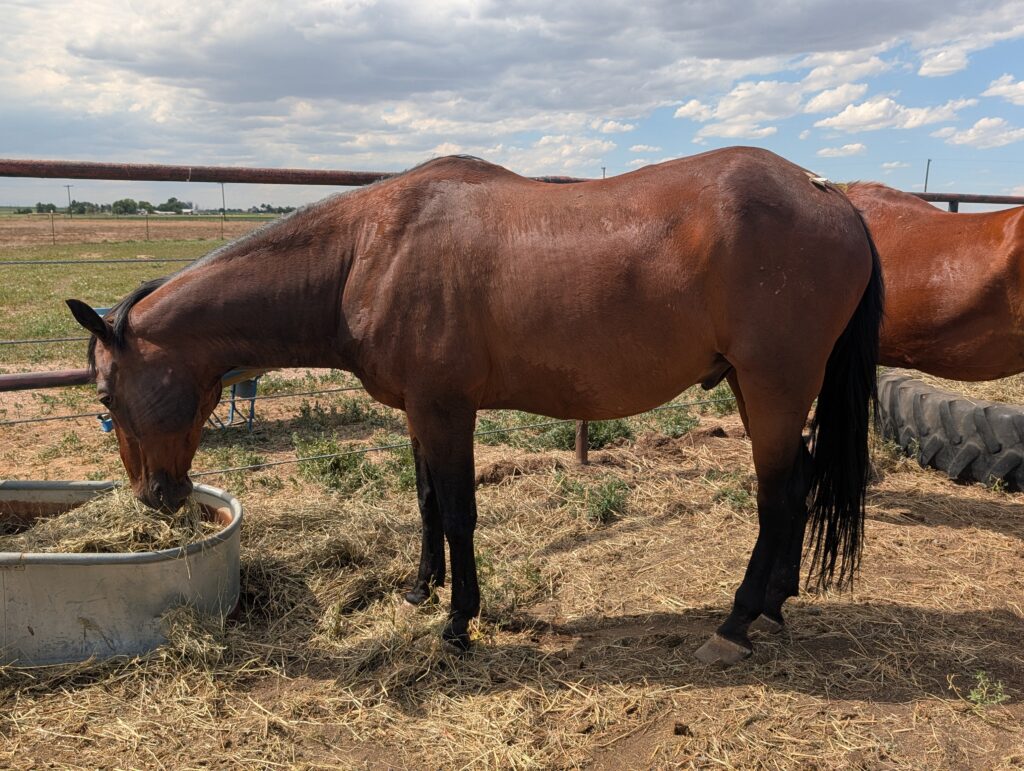
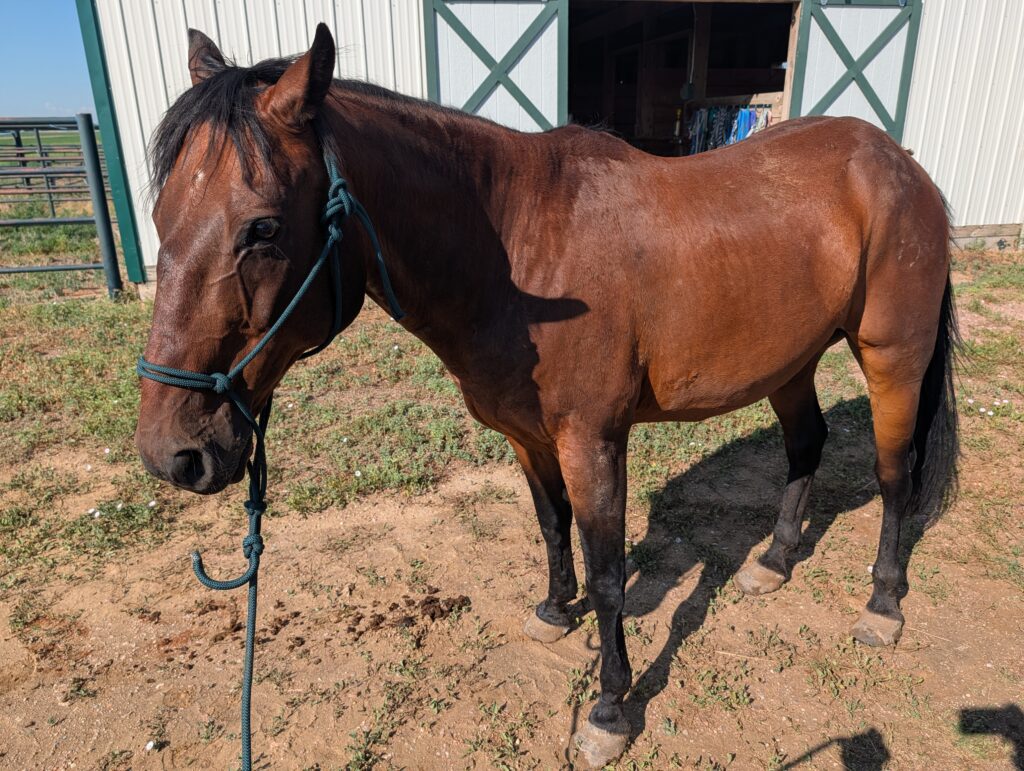
Jazzman was rescued in July 2026 after being cast off at a low end auction where the owner would have to be extremely ignorant or just uncaring to send this sweet, lamed up, horse to a place where odds were high for an unethical trader or kill buyer to obtain the winning bid.
Per our veterinarian’s exam and evaluation:
Jazzman is an approximately 15 year old QH-style grade bay gelding with a left hip freeze brand and a right-sided frontal bone facial deformation. His lameness score is 3 out of 5 lame on the left front limb with a lower heel and longer toe on the right front than the other overgrown feet. Due to his degree of lameness, there was no reason to try evaluating him at more than a walk. This was not an issue of just needing a trim of overlong hooves.
Prior to the day of the vet exam, Jazzman was noted to lay down often in the large turnout pen, and shifting front limb weight-bearing was also seen. Jazzman could not pick up his front feet for examination or hoof-tester application and walked with a quick, stilted gait, showing an inability to prolong the stance phase of the weight-bearing front limb up underneath the thorax, which can suggest heel or toe pain.
Radiographs of the f orefoot lateral and DV images were taken. A partial view of the navicular bones can be seen in the DV views, which is not possible in normal stance leg radiography. The left navicular in these views can be seen partially without obstruction or overlay of the short pastern bone, and multiple medullary vascular and cystic structures are visible, indicating chronic navicular bone changes.
In both lateral views, the navicular flexor surfaces show sclerotic and pitting changes, which can be construed as causing severe damage to the deep digital flexor tendon (DDFT) that runs over this surface under high PSI pressure.
Navicular changes, or caudal heel pain, is a bilateral degenerative disease of the navicular sesamoid bones, and the lytic changes in the medullary bone, as well as the smooth-to-roughened flexor surface. Changes are painful, degenerative, and common in many quarter horse and warmblood horses. These changes can be ameliorated by early detection, corrective shoeing, and pharmaceutical administration, with the mainstay treatment being bi-annual bisphosphonate injections in the muscle.
Sadly, Jazzman was well past the early detection stage as well as a point where any of the usual recommended treatments could provide any relief.
More About Jazzman
- In Assessment
- Bay
- Gelding
- 2011
- QH Cross
- Colorado