
Magnolia
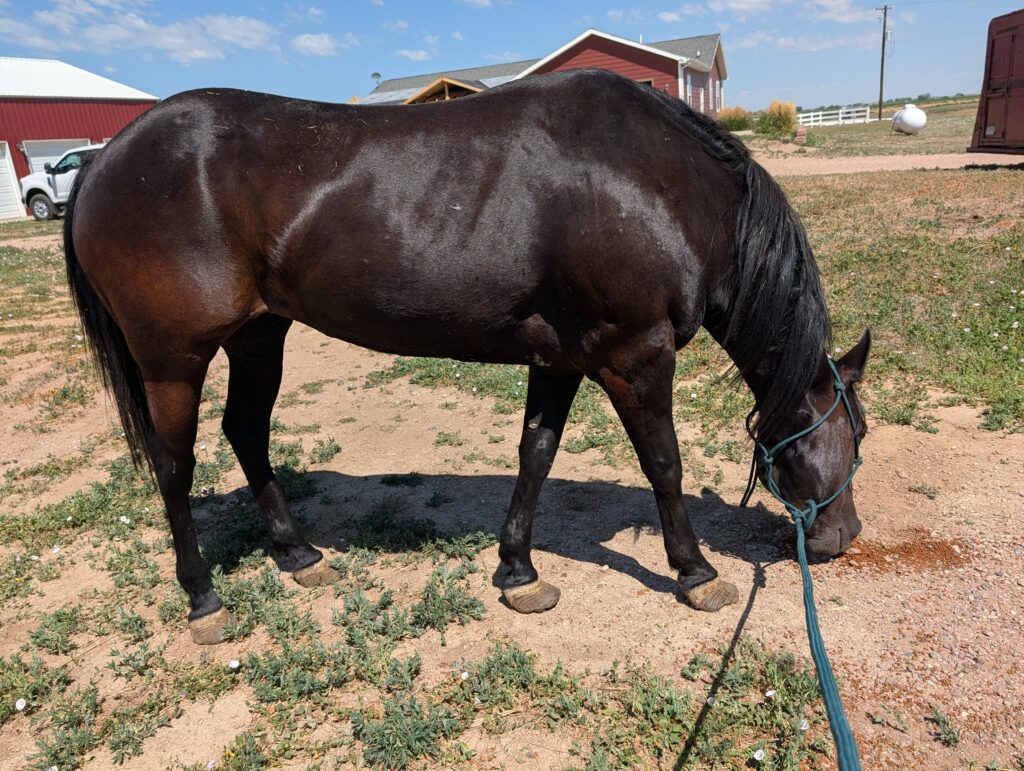
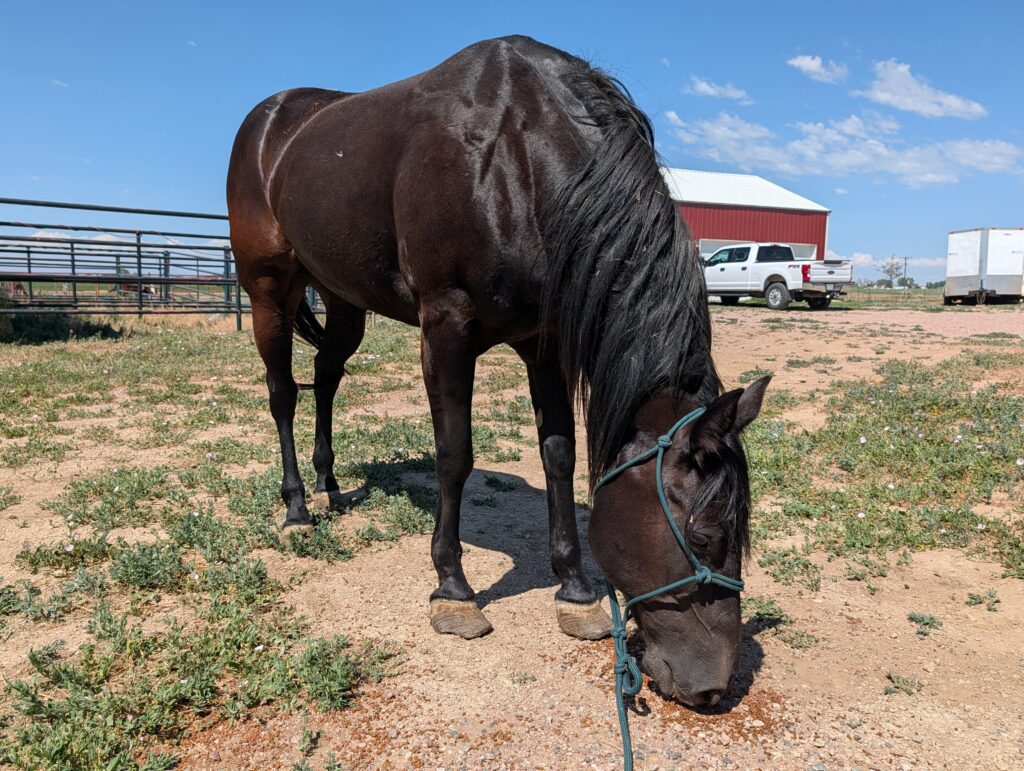
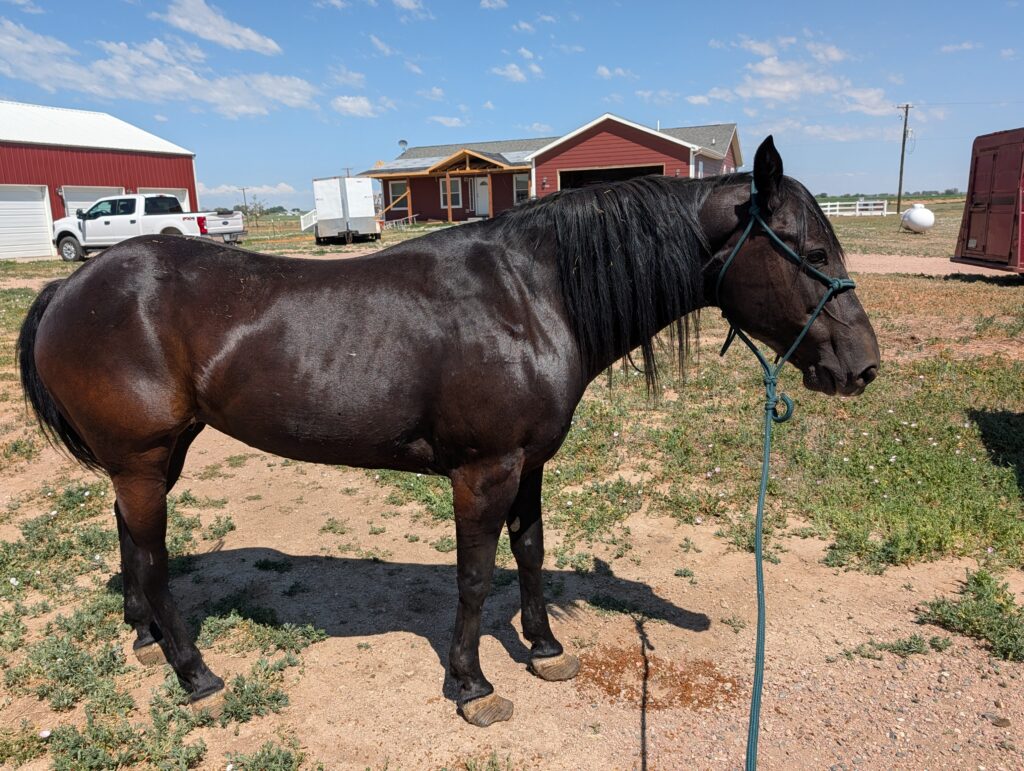
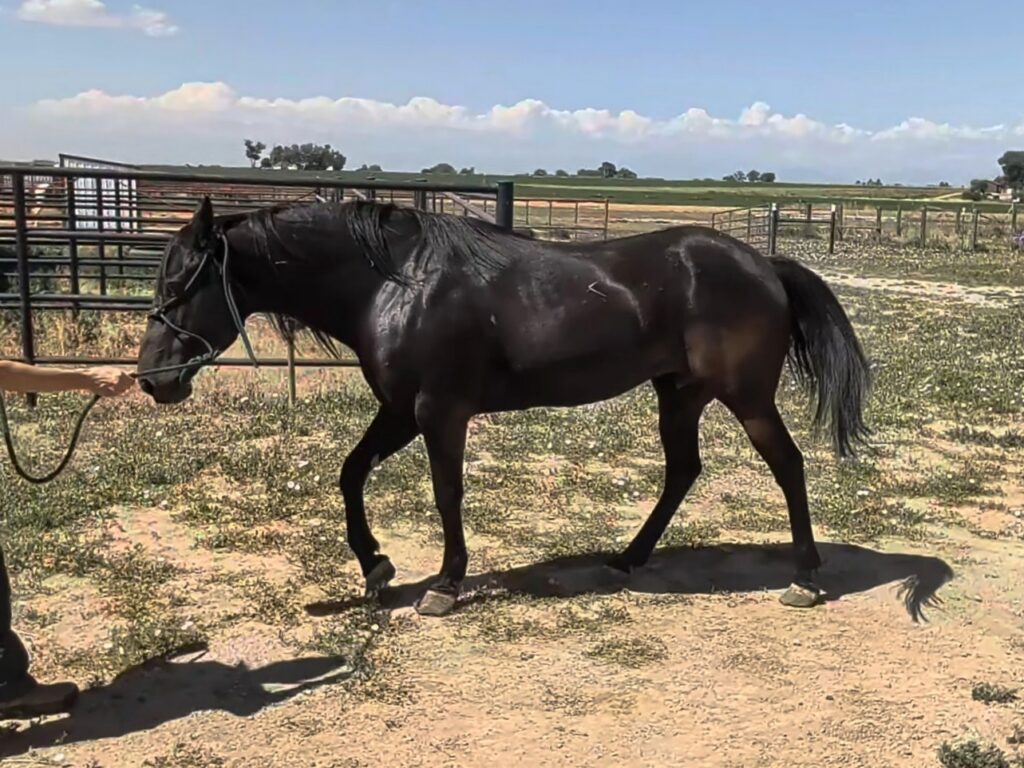
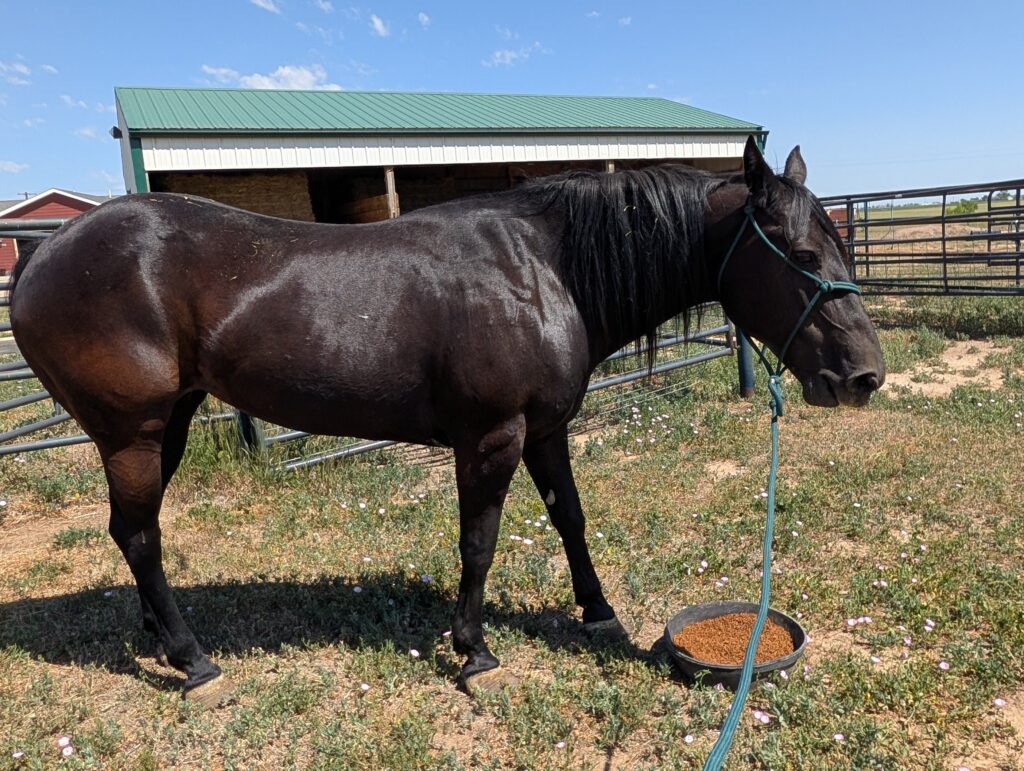
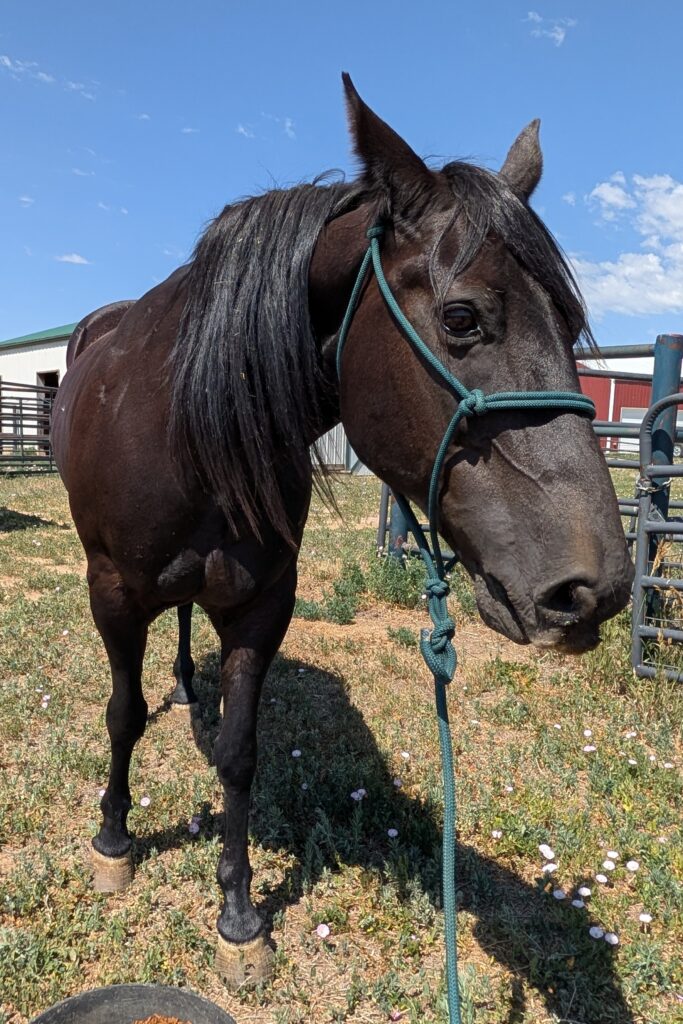
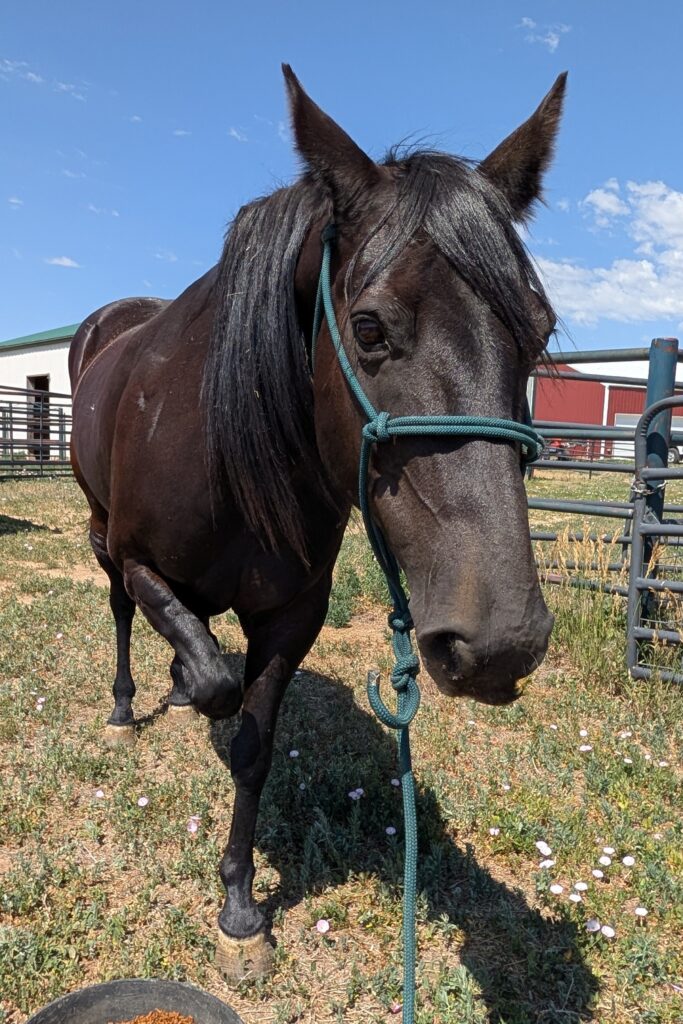
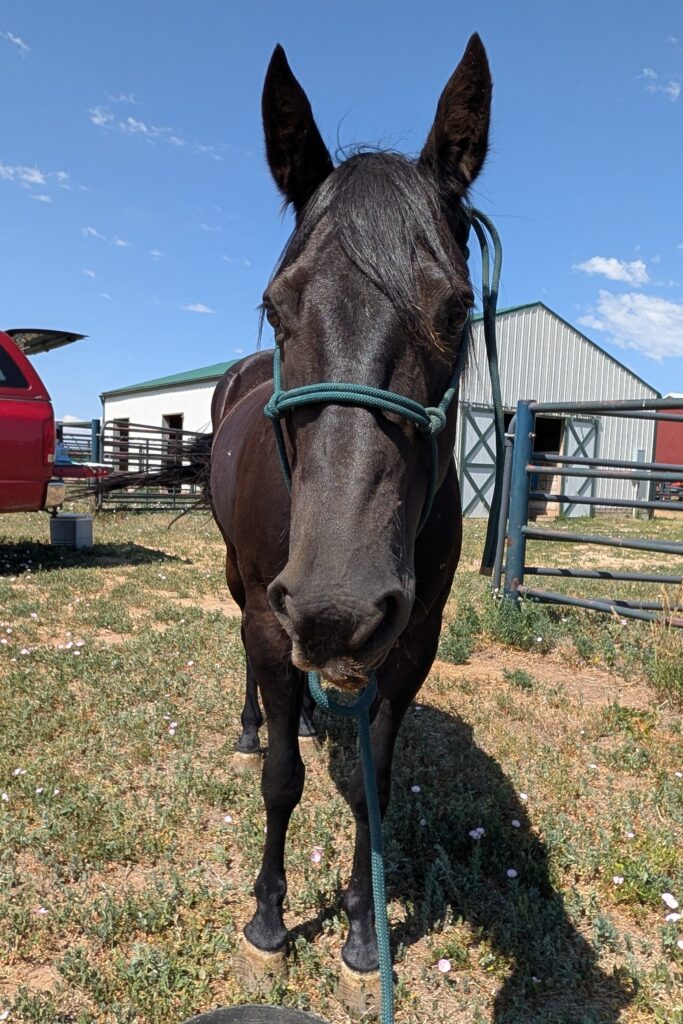
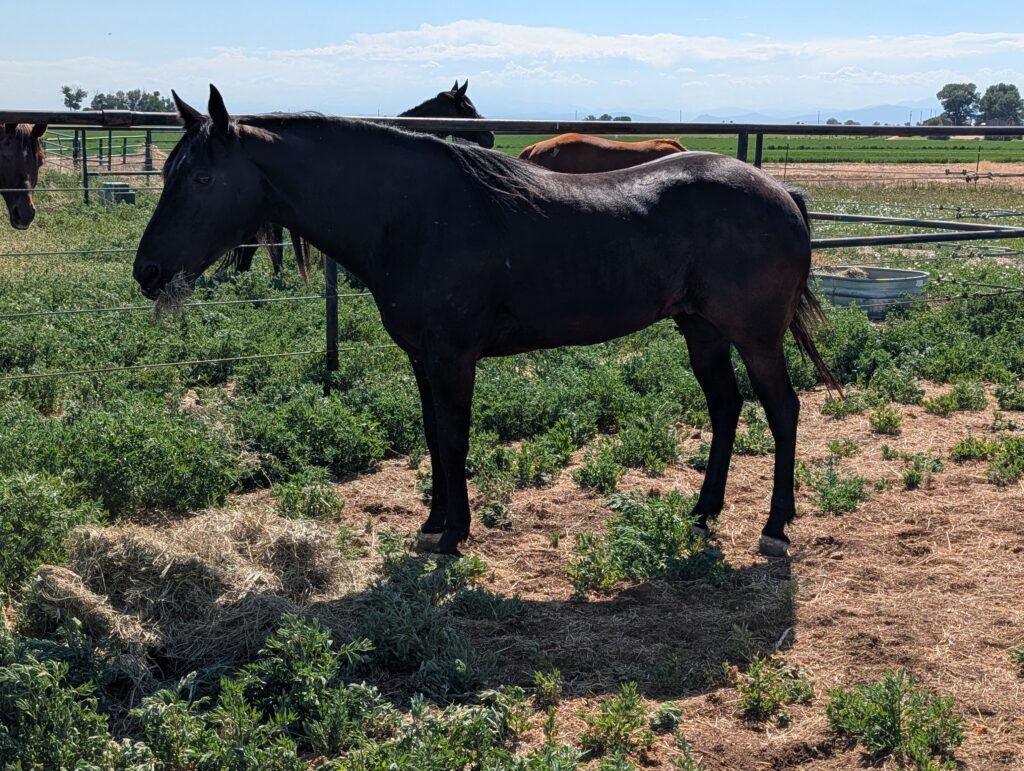
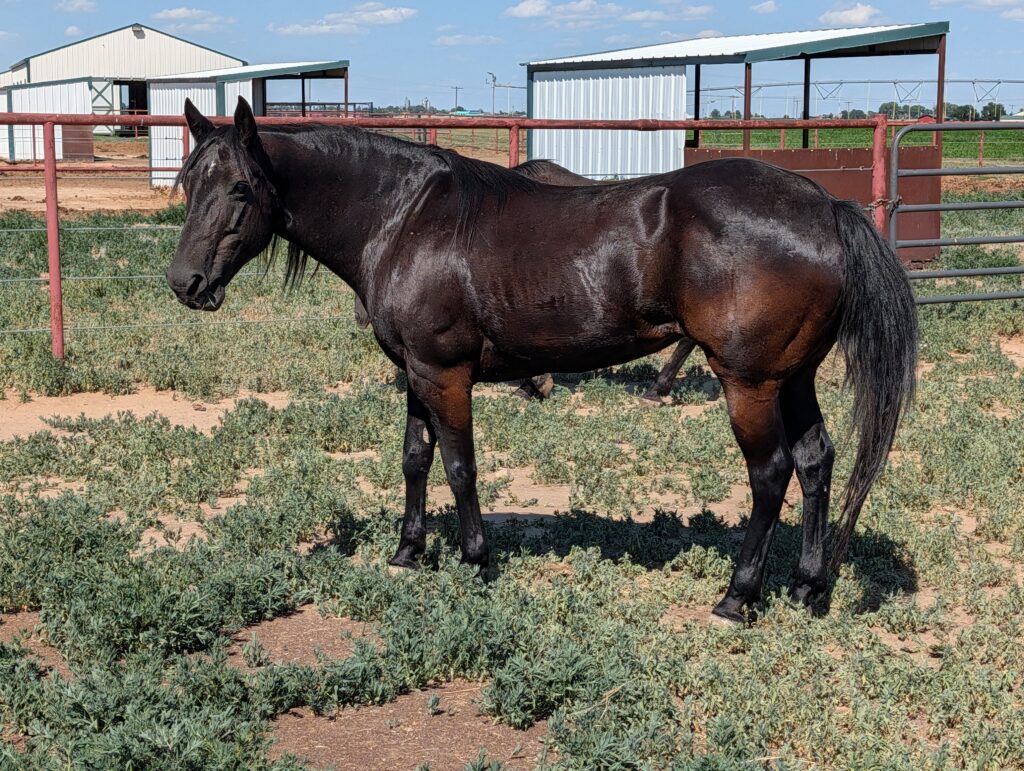
Magnolia was rescued in July 2026 along with 11 other horses in various states of poor health and in danger of ultimately entering the slaughter pipeline in the near future.
Magnolia’s veterinary exam and evaluation provided the following information:
She is on the heavier side with a body condition score (BCS) of 6/9 and with a severely cresty, firm neck above the nuchal ligament. She has alopecic lesions, a firm ping-pong ball-sized lesion with multi focal to coalescing scabs suggestive of a healing bout of Streptococcus equi ssp equi (aka strangles). No nasal discharge, heat or swelling in the retropharyngeal region, fever, or abnormal lung sounds.
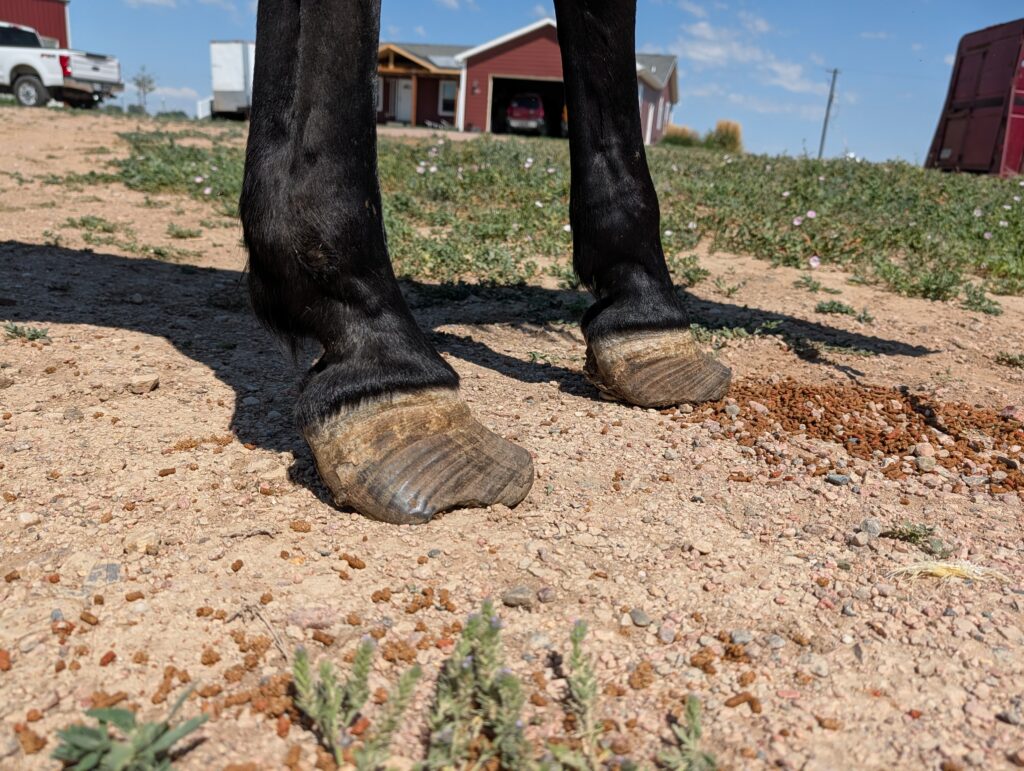
Magnolia walks on her heels, short-strided with quick turn-over. After the 150 yard slow walk off of gravel on the grass to the exam area, her nostrils are flared and heart rate elevated from pain. Lameness score 4/5 on both forefeet, there are several deep rings of approximately 3 months’ of growth in her hoof walls and the toes are elongated but have been bluntly cut-off without shaping.
The dorsal hoof walls of the forefeet are flared rostrally and both have bounding digital pulses.
Magnolia is unable to lift either forefoot due to pain in the contralateral foot. Radiographs were taken of her forefeet due to a strong index of suspicion of bilateral laminitis. Because she was in extreme pain while standing, Xrays were taken post mortem and revealed the following:
“Both coffin bones show signs of ventral rotation, with the left approximately 6 degrees and the right 10 to 11 degrees. Both distal tips of P3 are “tipped,” indicating chronic pedal osteitis, which can be secondary to thin soles and weight-bearing on the sole rather than the hoof wall, or secondary to rotation and acute pressure from the changed orientation and weight-bearing apparatus of the foot following lamina break-down and eventually sinking of the bony column in the hoof.
Sinking cannot be fully evaluated with a few Xrays, but the degrees of rotation are profound and end-stage for pain and quality of life.
Founder is common in breeds such as Morgans who carry a disproportionate “easy keeper” metabolic predisposition, and many breeds such as drafts, some ponies, and most gaited horses, have worked out genetic markers for aberrant polysaccharide storage or pre-diabetic metabolic states that make these horses prone to insulin resistance, high circulating blood sugars if fed higher sugar feeds or grazed on irrigated pastures, which creates an inflammatory condition within the lamina of the hoof.
Inflammation in the laminar space causes a widening and enlarging force between a rock and a hard place, inside the capsular hoof wall within the structure that binds the hoof to the coffin bone. Degeneration of the lamina allows the coffin bone to separate away from the dorsal hoof wall, pulled by the deep digital flexor tendon (DDFT) and gravity, inducing rotation, and gravity assists with eventual sinking of the bony column.
These laminitic horses need careful low sugar diets, body condition management to keep them lean, and in the case of an acute episode, medical management, corrective shoeing, and stall rest that can last months. Once a laminitis episode has occurred, scarring within the laminar space makes subsequent episodes more likely and less successful of recovery.”
It was apparent that Magnolia had past laminitic episodes and not 100% correct management subsequently based on the findings from this evaluation and diagnostics. Due to it being too late to provide relief from her intense pain and the degree of rotation in the left and, most notably, the right front she was humanely euthanized in a peaceful setting with compassion and dignity.
More About Magnolia
- In Assessment
- Black
- Mare
- 2014
- Morgan
- Colorado