
Granny
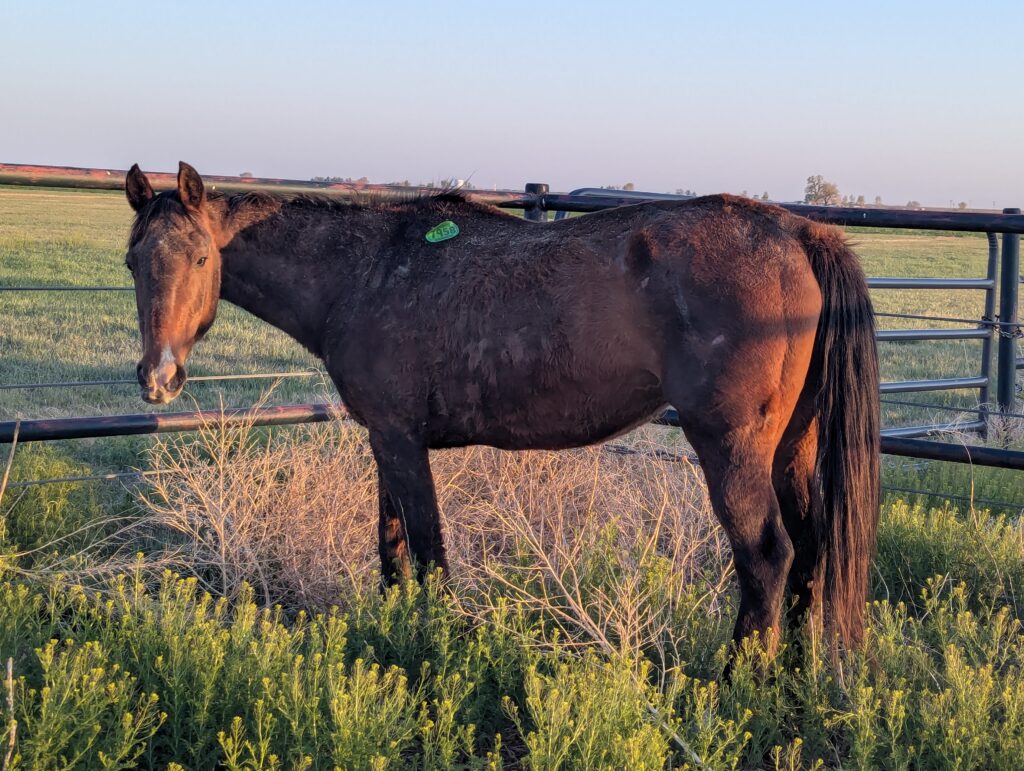
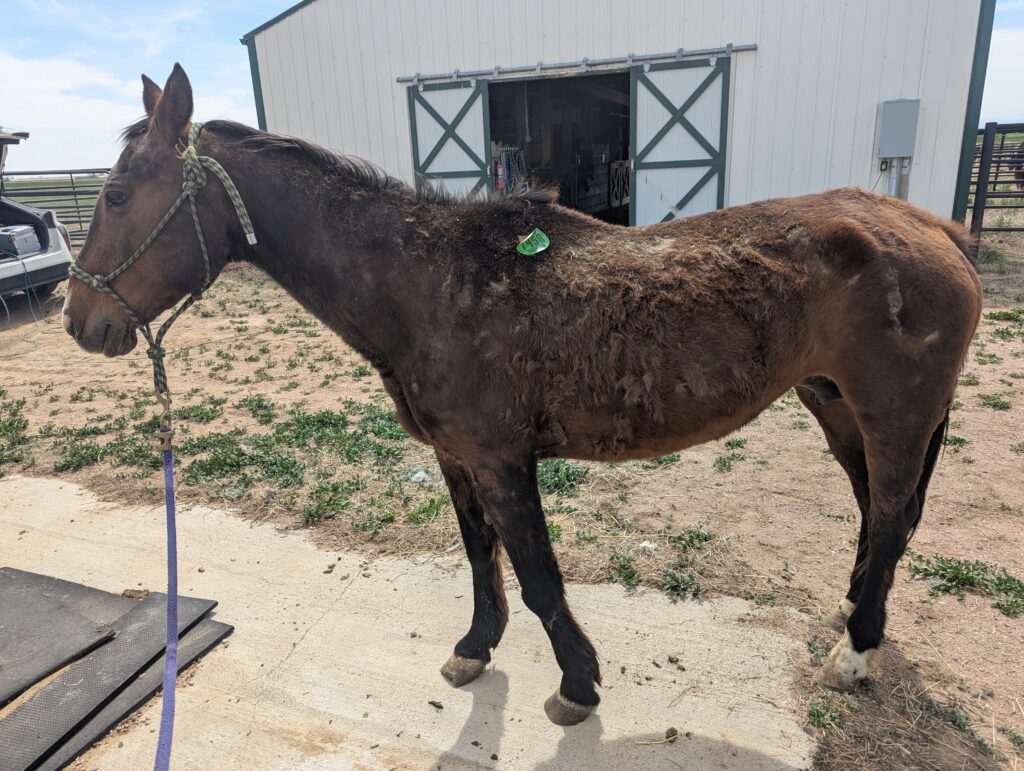
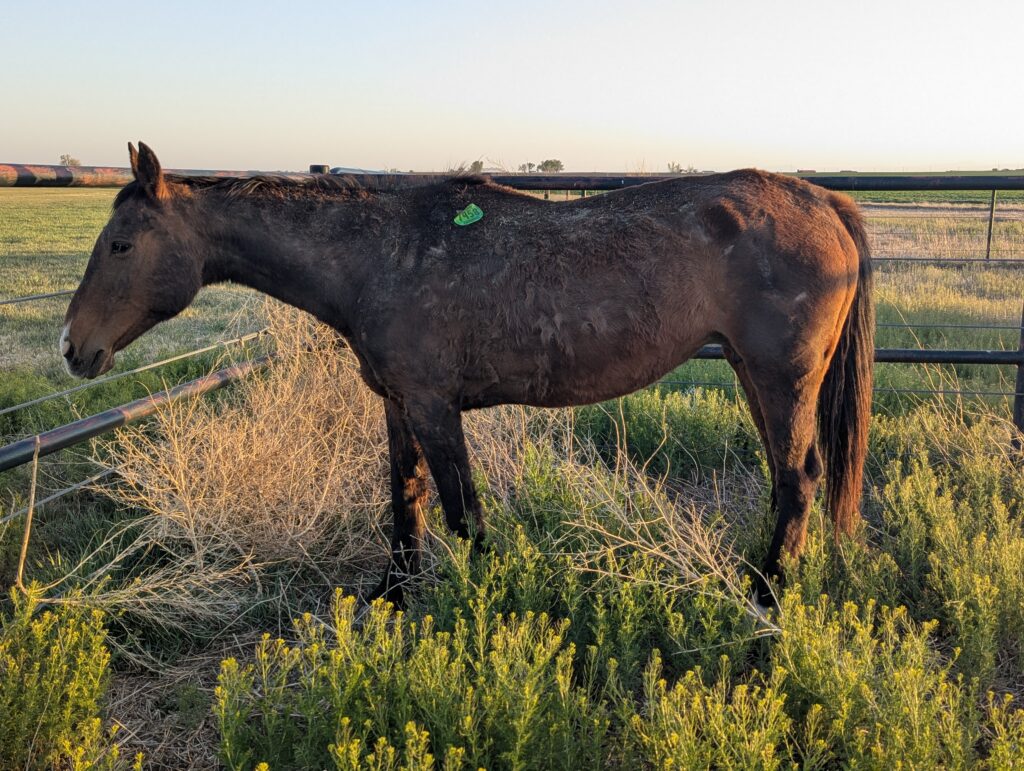
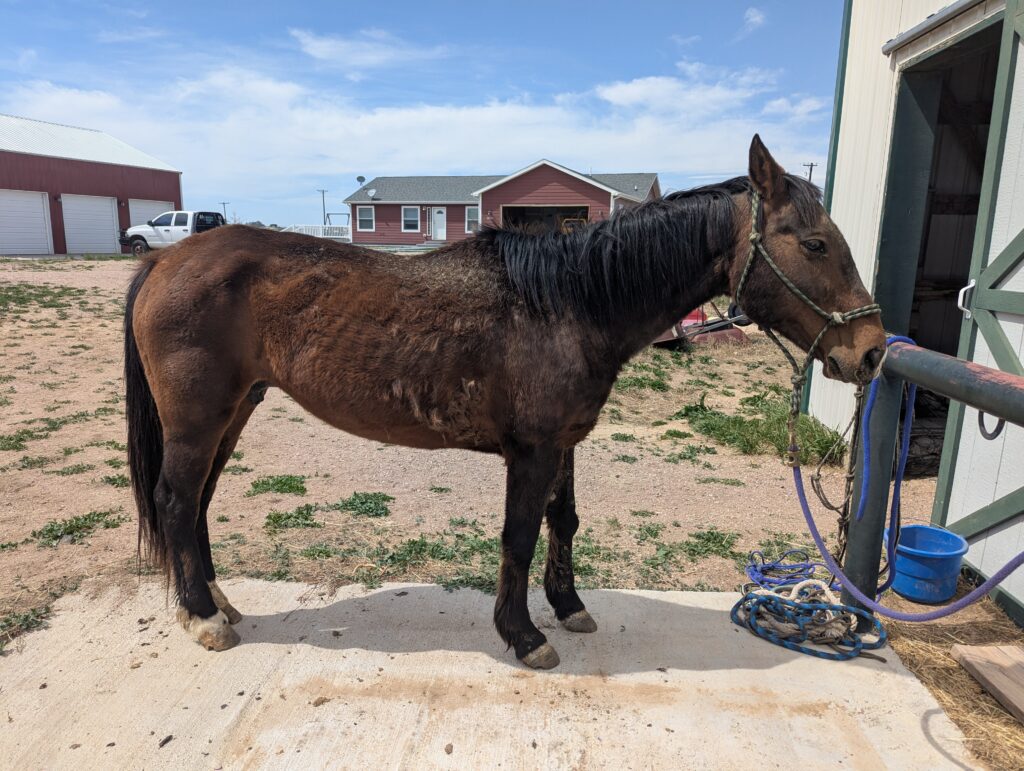
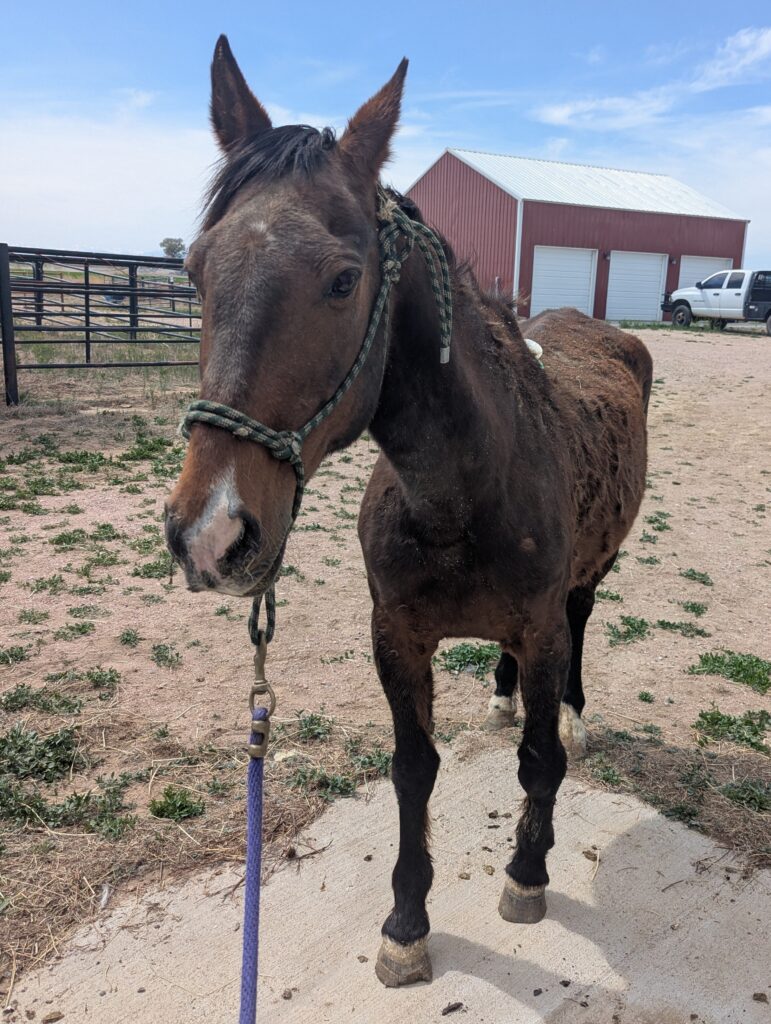
Granny was rescued to prevent her entering the slaughter pipeline in April 2026. She is an elderly bay mare, significantly lame due to advanced arthritis with structural changes in her left foreleg. The left front fetlock joint was swollen and conformational issues were evident.
Veterinary exam results yielded some of the following which included Xrays:
Granny’s right foreleg carpus (knee) has mild osteoarthritic changes which are best seen on the dorsal aspect of all three carpal joints on lateral view. Her left carpus has profound radiographic proliferative changes on the dorsal lateral aspect of both middle carpal and carpometacarpal joints.
This degree and appearance of bony proliferation may be consistent with a septic joint, likely a communicating lateral wound, as the cruciferous projections are heterogeneously consistent in two joints, cross two joint spaces (with bony bridging and fusion of distal carpal joint), and have both mineral opacity and densities.
Her poor range of motion may be due to pain and mechanical obstruction of proliferative bone. The carpometacarpal joint has little to no innate flexion capabilities, so it may not have contributed to significant range of motion (ROM) loss of the overall carpus. The middle carpal joint has partial flexion ROM, but likely has overall decreased carpal flexion capability.
Granny’s body condition score (BCS) is 3/9; lameness 3/5 left front leg. Both knees (carpi) are irregularly shaped, with L>>R remodeling and palpable pathology present in dorsolateral left front carpus. Both dorsal carpi palpate thickened skin on distal dorsal aspect, again with L>>R. Her left front knee (carpi) is bowed laterally at the carpus.
The left front carpus has decreased ROM by approximately 20%, and pain is evident with momentary deep flexion. Granny is also cow-hocked, with medial hocks almost touching in a squared-up stance.
If past owners had properly cared for this sweet older mare, she might have avoided months to years of suffering. Like too many other good horses, she was used up and cast off. Granny was humanely euthanized as there were no options to provide an improved or pain-free quality of life.
From the detailed assessment, it was clear that Granny could not be provided a pain-free quality of life and humane euthanasia was the kindest option available.
Again, it is horrible, cruel and wrong to have so many horses crippled up, broken down and cast off at low end auctions to wring a final “profit” off of them.
More About Granny
- In Assessment
- Bay
- Mare
- 2002
- QH Cross
- Colorado